

At Shanghai Marya, we serve as a one-stop solution for all cleanroom needs. For over two decades, Marya have supplied customers with superior cleanroom equipment and hvac system across the globe. Equipped with excellent industry experience, marya team has the knowledge and skills to design and develop a standard or customized cleanroom solution suitable for any critical environment.
In the following article, we provide an overview of 5 method on how to control differential pressure. This is the experience summary of our engineers. We outline what it is, how we measure it, and how it affects other conditions in a cleanroom.
In order to ensure that when the cleanroom is working normally or the balance is temporarily damaged, the air can flow from the area with high cleanliness to the area with low cleanliness, so that the cleanliness of the cleanroom is not disturbed by polluted air. Therefore, it is necessary to control the differential pressure of each cleanroom in the pharmaceutical factory. Then we will show you how to control the differential pressure in the clean area.
1. Differential Pressure Control Regulatory Requirements
We clearly need to know about differential pressure in clean workshop in 2010 version of GMP certificate: The differential pressure between clean area and non-clean area and between clean areas of different grades should not be less than 10 Pascals, an appropriate pressure gradient should be maintained between operations of the same cleanliness level with different functions to prevent contamination and cross-contamination.
2. Determining differential pressure across cleanrooms
(1)The differential pressure of each room in the same clean area
In order to determine the differential pressure of each cleanroom in the same clean area, you can compare the pressure of each cleanroom with the clean area corridor, and take the pressure value of the clean area corridor as the benchmark.
Because the clean area corridor runs through each cleanroom, the differential pressure between each cleanroom and the clean area corridor is determined, and the differential pressure between the cleanrooms is also determined. The pressure value of all cleanrooms is based on the pressure value of the corridor in the clean area, and the differential pressure between each other will not be confused.
For example, in the solid preparation workshop, it can be determined that the positive pressure value of the corridor in the clean area is 18 Pa. The dust in the crushing room and the weighing room is seriously dispersed, and it is generally connected to the clean area corridor through the front room. In order to prevent the air with large dust content in the room spreading to other rooms through the corridor. It can be determined that the positive pressure of the crushing room and the weighing room is 12 Pa, and the positive pressure of the front room is 15 Pa. In this way, the crushing room and the weighing room have negative pressure relative to the front room, and the front room has negative pressure relative to the clean area corridor.
(2)Differential pressure between different grades of clean areas
To determine the differential pressure between clean areas of different levels, you can first determine the positive pressure of the cleanroom of the low cleanliness level, and then increase the positive pressure value base in turn to determine the positive pressure of the cleanroom of the high cleanliness level.
In special cases, the differential pressure in the clean area, the production workshop of medicine, such as the soft capsule production workshop, has cleanrooms with different relative humidity in the same clean area. The relatively dry cleanroom should be controlled to have a positive pressure relative to the adjacent cleanroom to avoid the flow of wet air to the dry cleanroom. The production plant of highly allergenic drugs such as penicillin, and the cleanroom where the powder is exposed, such as the sub-packaging room, should maintain a relatively negative pressure.
3. Maintaining differential pressure air volume of differential pressure
The differential pressure air volume of each cleanroom in the clean area to maintain a positive differential pressure needs to be supplemented by outdoor fresh air. Therefore, the size of the positive differential pressure air volume in the cleanroom directly affects the fresh air ratio of the purification air conditioning system and the energy consumption of the purification air conditioning system. Each cleanroom in the clean area maintains the pressure differential air volume of the negative differential pressure, which penetrates into the cleanroom from the cleanroom. In many cases, it is the outdoor air without purification treatment. Therefore, the size of the negative pressure differential air volume in the cleanroom is directly related to the cleanliness of the negative pressure cleanroom. At present, the common methods for calculating the differential pressure air volume in the cleanroom are the gap method and the ventilation frequency method.
4. Maintaining a constant cleanroom differential pressure
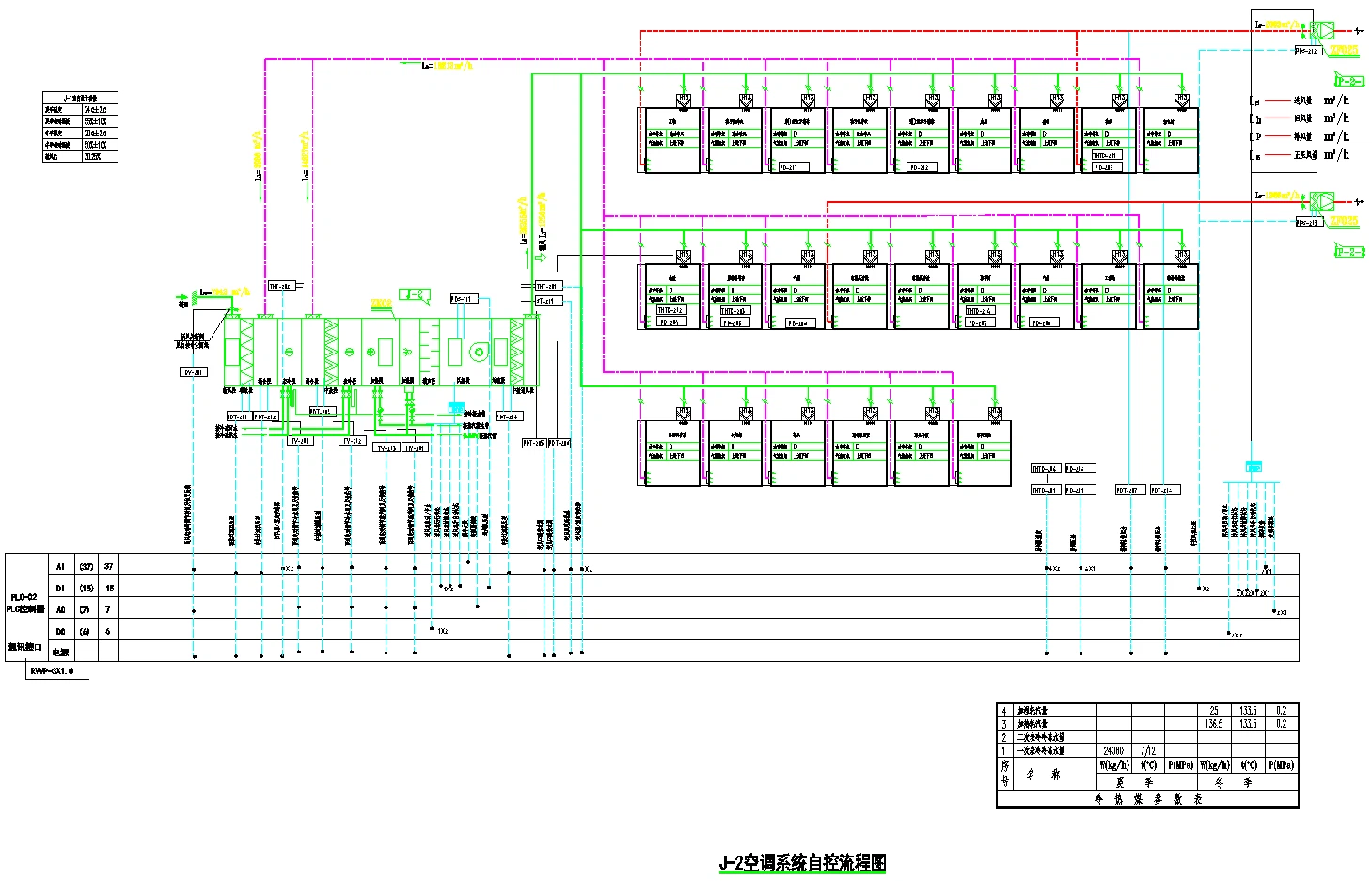
The above cleanroom differential pressure value and differential pressure air volume are only theoretical values, and certain technical measures and facilities need to be taken to realize them. In practical projects, there are many ways to control the differential pressure in the cleanroom: in normal circumstances, pepole usually choose constant air volume system. A manual split multi-leaf control valve or butterfly valve can also be installed on the return air branch pipe of the cleanroom to adjust the return air volume and control the indoor differential pressure.
(1)Install residual pressure valve
Set up a mechanical residual pressure valve or an automatic residual pressure valve on the envelope structure of the differential pressure interface. Set an allowable differential pressure, start when the indoor pressure exceeds the differential pressure, so that the cleanroom maintains the set pressure.
The set pressure is maintained by the static differential pressure automatic control system, which automatically adjusts the opening of the return air valve on the return air duct of the purification air conditioning system, so that the cleanroom maintains the set pressure. The frequency converter adjusts the speed of the fresh air fan to change the fresh air volume size to maintain the set pressure.
(2)Calibrating Differential Pressure Gauge
When the door is open and the two rooms are connected, the differential pressure should display 0. After closing the door, the displayed value can be adjusted because it meets the requirements.
(3)Try not to adjust
Can not adjust as much as possible: During the design, because the design institute has basically calculated the room space, wind flow direction, air volume, ventilation quantity, etc. after theoretical calculation, try not to adjust it as much as possible.
(4)According to regulations
Adjust according to GMP requirements, determine the level, and select the differential pressure value of adjacent rooms, whether it is positive pressure or negative pressure, etc.
(5)Attention to detail
Space sealing, floor drains, door gaps, transfer windows, etc. Installing residual pressure valve on adjacent room partition wall to control positive pressure. The advantage is that the equipment is simple and reliable. The disadvantage is that the size of the residual pressure valve is relatively large, the ventilation volume is limited, it is not convenient to install, and it is not convenient to connect with the air duct. It can only be installed in individual cleanrooms.
(6)Perform system tuning
Installing an electric actuator system on the valve shaft of the control valve of the return (exhaust) air branch pipe of the cleanroom, so as to form an electric control valve with the corresponding valve.
According to the feedback value of the differential pressure in the cleanroom, the valve opening is fine-tuned, and the differential pressure in the cleanroom is automatically adjusted to return to the set value. This method is more reliable and accurate to control the differential pressure in the cleanroom, and the cost of the control system is not high, and it is widely used in engineering practice. The system can be installed in the cleanroom that needs to display the differential pressure or the return (exhaust) on the air branch pipe regulating valve.
Marya can provide high-quality adjustment instruments to cooperate with clean room air-conditioning systems and automatic control systems. The electric regulating valve can precisely control the indoor differential pressure, and can adjust 100% accurately to reach the set value.
5. Differential pressure debugging method
In the process of differential pressure debugging, in order to ensure the number of air changes in the cleanroom and the effect of equipment exhaust and dust removal, try not to change the air supply volume and the air volume of the equipment exhaust fan and dust removal fan. The differential pressure is mainly adjusted by adjusting the return air volume and the system exhaust air volume. The functional rooms in the human-cleaning area should follow the human-cleaning route as follows: non-clean area corridor, shoes changing, primary changing room, secondary changing room, buffer room, inner cleanroom corridor.
Maintain a positive differential pressure of at least 30Pa between inner cleanroom corridors and non-clean areas. The basic principle of establishing this differential pressure is that the supply air volume is greater than the return air volume, exhaust air volume, and leakage air volume to maintain positive pressure. The differential pressure is established by achieving a balance between the supply air volume and the exhaust air volume + differential pressure air volume (residual air volume) of the cleanroom.