

Shanghai Marya Pharmaceutical Engineering and Project Co., Ltd.
Shanghai Marya Pharmaceutical Engineering and Project Co., Ltd. was founded in 2014 in Shanghai, China, is a total solution provider specializing in engineering design, clean room engineering, pharmaceutical engineering, pharmaceutical equipment, project management and verification and other technical services. We have three factories and a number of experts and technicians who have been engaged in pharmaceutical and medical industries for more than 20 years. Worriless and relieved solution for customer is our value proposition, we are consistently committed to helping clients to design and build clean workshops, pharmaceutical turnkey solutions.
Why Choose US
Production Equipment
We have strong technical force and excellent production equipment, including laser cutting machine, numerical control punching machine, numerical control bending machine, plate shearing machine, numerical control milling machine, automatic leveling machine, bending production line, automatic hollow glass window production line, automatic door plate strip sealing machine, automatic spraying production line and other processing equipment, as well as various precision testing instruments and equipments.
Product Market
Marya scope of business covers more than 60 countries and regions around the world, such as the United States, Russia, Bulgaria, Britain, Portugal, Poland, Switzerland, ltaly, New Zealand, Malta, Moldova, Malaysia, Uzbekistan, lran, Egypt, Saudi Arabia, UAE, Ecuador, Dominica, Panama, Uruguay, Argentina, Tanzania, Zimbabwe, Ethiopia, Indonesia, Bangladesh, and others, and we gained good reputation.
Rich Experience
Our experienced engineering team with more than 20 years experience in cleanroom design and construction can ensure that process and materials for your plant is designed and manufactured in the most cost-effective manner with reliablequality to fulfil GMP/FDA/ISO/SGS requirement.
Our Service
Continuous technical and service support:No matter what products and services you buy from our company, no matter when your project is completed, we will continue to provide you with operation, maintenance, spare parts supply and factory upgrading consulting services. If necessary, our technicians can provide technical support and services to all Marya customers directly or remotely.

Features: Aluminum frame finished windows, stainless steel finished windows, steel frame finished windows

Most of the clean room sliding doors are electric sliding doors, with multi-functional features, and their door bodies have strict requirements against wind load, suitable for installation on various factory building structures.

Cleanroom PVC fast rolling door, also known as fast soft shutter door, is the door that runs at a speed of more than 0.6 meters per second, is a fast lifting barrier-free isolation door, the main role is to quickly isolate, thus ensuring the workshop air quality dust-free level.

Clean room doors are doors used in conjunction with clean room engineering, characterized by the ability to meet the general requirements of clean room specifications, such as non-corrosive, not easily dusted, easy to clean, no dead ends, etc.
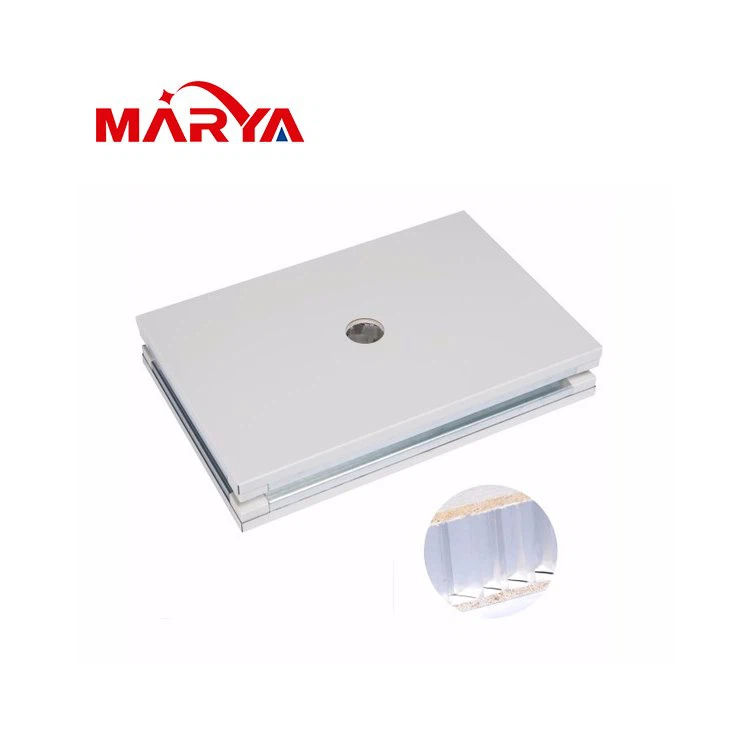
Clean room sandwich panel is also called cleanroom board, it is a composite board made of color coated board, stainless steel and other materials as the surface material.
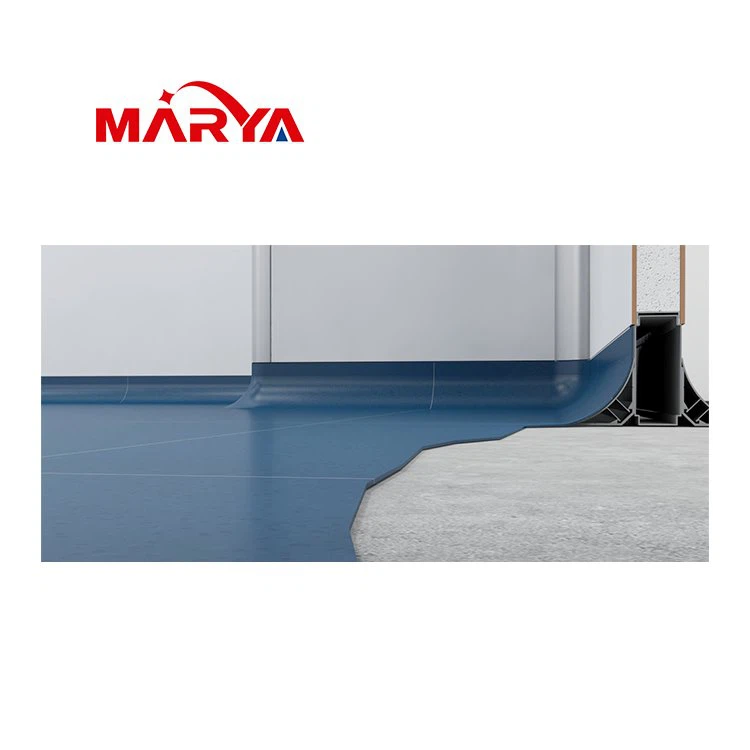
Cleanroom PVC floor is the floor produced with polyvinyl chloride material. It is specifically made of PVC and its copolymer resin as the main raw material, adding fillers, plasticizers, stabilizers

Cleanroom epoxy floor is a high-strength, wear-resistant, and beautiful floor with the advantages of no joints, solid texture, good chemical resistance, anti-corrosion, dust-proof, easy maintenance, and low maintenance costs.

The Cleanroom floor should be made of hard material, good integrity, smooth and flat, non-cracking, wear-resistant, impact-resistant, not easy to accumulate static electricity, easy to clean and disinfect, and corrosion-resistant.

Clean room FFU refers to fan filter unit and can be modularized, which makes it widely used in clean rooms, clean benches, clean production lines and assembling clean rooms, local class 100 environment, etc.
What is Clean Bench
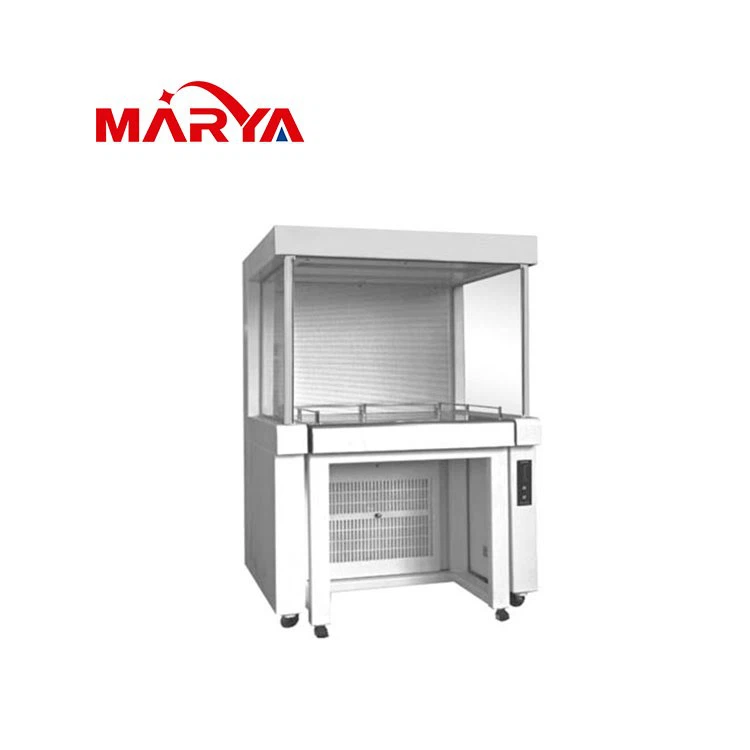
A clean bench is an enclosed laboratory bench that is designed to prevent pollution and contamination by controlling and keeping the air cleanliness level at a certain point. It is a type of laminar airflow cabinet (also known as a tissue culture hood). Clean benches are frequently used in laboratories across a wide range of industries worldwide. These hoods utilize state-of-the-art technology in order to provide the laboratory with a clean, safe, bacteria-free environment for sensitive biological substances. The hood ensures that the operating environment is 99% free of .3 micron particles.
Advantages of Clean Bench
Clean environment
Using hepa air filtration technology, the cleanliness level can reach ISO 5, effectively removing dust, microorganisms and harmful particles in air, and providing a pure and sterile working environment for experiments.
Efficient operation
It can provide a clean air environment with vertical flow or horizontal flow as needed. The equipment has a reasonable structure, is easy to operate, and is equipped with appropriate lighting and display equipment to ensure that experimenters can perform efficient and accurate experimental operations.
Safety protection
It has protective functions and effectively prevents harmful external gases and microorganisms from entering work area through technologies such as filters, negative pressure control, and air flow barriers. In addition, under the irradiation of UV lamp, clean bench can be disinfected regularly to ensure the health and safety of experimental personnel.
Flexible and diverse
Size and configuration can be customized according to actual needs. Whether it is a small laboratory or a large production line, you can flexibly choose clean bench of different specifications to adapt to different experimental requirements.

The size of the clean bench will be determined by the size and configuration of the work piece and the nature of the work to be done. Also, whether the operator will be sitting or standing will impact the table height selected. To minimize turbulence within the clean bench, objects should be placed so the smallest cross section is perpendicular Clean benches range in size from compact tabletop versions to larger cabinets. Sizes are available from 2 ft. to 10 ft. in width, work area heights from 22 in. to 46 in. and table depths up to 48 in.
A horizontal flow clean bench takes up more floor space because the filter is located behind the unit, rather than on the top as with a vertical flow cabinet.
How clean your bench needs to be depends on the particular operation. Government regulations and customer specifications may be factors in the decision. Clean room benches are usually classified according to the number and size of particles permitted per volume of air in a specific amount of time. This is related to not just the quality of the filter, but also the airflow within the enclosure.
Class 100 (ISO 5) - Using a HEPA filter does not guarantee that the cleanroom bench interior will be Class 100 (ISO 5). You need the proper airflow within the bench.
Clean Bench vs Biological Safety Cabinet
different functions
The Clean Bench is an important purification equipment that uses air purification technology to achieve local clean environment protection;
Biological Safety Cabinets can not only provide a local clean working environment but also filter aerosols generated during experimental operations to prevent harmful substances from polluting the environment and causing health hazards to experimenters.
different structures
The working area of most Clean Benches is under positive pressure. With the blower, the air on the top of the equipment is directly transmitted to the working area through the filter system to form air pressure and then discharged from the front window.
The working area of the Biological Safety Cabinet is under negative pressure, which can prevent the aerosol in the experimental sample from escaping through the front window. Its interior separately filters the airflow through the working area and the exhaust airflow.
different uses
The Clean Bench is suitable for non-toxic and harmless operation objects, generally used in hospitals, biopharmaceuticals, food, medical science experiments, optics, electronics, sterile room experiments, sterile microbial inspection, plant tissue culture inoculation, and other scientific research and production departments that require a local clean and sterile working environment.
The use of Biological Safety Cabinets is more suitable for experiments with volatile chemicals and volatile radionuclides.
It is widely used in biopharmaceuticals, medical and health care, university scientific research laboratories, optoelectronics, microelectronics manufacturing and other fields.
1) Intelligent control of colorful LCD multi-parameter display: the real-time display of wind speed, flow, temperature, time, life, system status and other information, with password lock function, easy to manage
2) One-piece integrated HEPA filter with a filtration efficiency of 99.995% and a filter life monitoring function
3) The micro-wind speed sensor monitors the wind speed in real time and dynamically, allowing users to truly grasp whether the equipment is running safely.
4) Standard glass door lock function, convenient for laboratory equipment management
The clean bench is recommended for work with non-hazardous materials where clean, particle-free air is necessary to avoid contamination. The clean bench ensures that the work surface is constantly flooded with HEPA-filtered air in a laminar flow. Unlike a biological safety cabinet, the clean bench protects the work on the work surface, but not personnel or the surrounding environment from aerosols created on the work surface. The HEPA air filter can trap 99.999% of particles with a diameter greater than 0.3 microns.
Clean benches are equipped with either vertical or horizontal laminar flow. Both of these configurations provide a unidirectional velocity along parallel flow lines. Simply, all of the air inside the confines of the bench flows in a single direction without backwash, typically an an area of turbulent airflow created by obstructions, equipment, or movement within the clean bench enclosure. Proper enclosure design helps prevent backwash and ensures that the vertical or horizontal laminar air flow continues to protect work on the surface of the clean bench.

The first decision a specifier of clean benches faces is horizontal or vertical laminar flow. Vertical and horizontal airflow benches each have strengths and weaknesses when it comes to keeping objects free from contamination. The configuration of the work piece and the nature of the work to be done will impact whether vertical or horizontal is best. The challenge is that when an object is placed into an airstream it is not perfectly aerodynamic and will block some of the airflow creating turbulence around itself. Where there is turbulence there is a reduced air exchange rate and possible mixing with adjacent airstreams. Turbulence can extend down the air steam from the object. Then energy from the turbulent area can draw air back upstream towards the object.
Horizontal flow clean benchHorizontal airflow is generally best when the work piece has a large horizontal surface and/or a narrow cross section perpendicular to the airflow. Horizontal airflow is also well suited for applications in which an individual must work directly over the work piece. In a horizontal flow clean bench there is constant clean airflow between the work object and the worker's hands or instruments. When using a clean bench with a standard 90 LFPM (Linear Feet per Minute) airflow velocity and a 30 in. work area, it takes less than two seconds for a complete air exchange to occur. A typical horizontal laminar flow workstation has a tabletop and a three-sided hood. The HEPA filter is located on the vertical rear side of the work surface and is susceptible to damage. A secondary grill is sometimes needed for filter protection.
Vertical flow is used for a number of reasons but the size and type of object are the primary considerations. Large objects can block the airflow in a horizontal laminar flow workstation, creating large areas of turbulence on the downstream side of the object. These turbulent areas often become contaminated as ambient air is drawn in. With vertical flow, air enters the work zone from the top and flows downward, surrounding the object within the work area. Air flows on the front, sides and rear, bathing the object on all sides with clean, filtered air.
How To Select A Clean Bench
Laminar flow refers to a state in which non-turbulent streams of air flow in one direction parallel to one another. Laminar airflow is the most efficient option for removing particulate contamination from a controlled area because the airflow uniformity and lack of turbulence keep clean airstreams from mixing with contaminated airstreams. An object being bathed with clean, turbulence-free, laminar airflow will remain clean and protected from nearby contamination.
Clean benches with either vertical or horizontal laminar airflow provide the cleanest working environments because HEPA-filtered air within these benches is unidirectional and turbulence-free. (Unidirectional is airflow having generally parallel stream lines, operating in a single direction with uniform velocity over its cross section.)
The air that bathes a product in a clean bench needs to be free of contaminants. This requires filtration. Clean benches are usually classified according to the number and size of particles permitted per volume of air in a specific amount of time. A HEPA (High Efficiency Particulate Air) filter is often used to filter the airstreams of a clean bench. To qualify as HEPA by U.S. government standards, an air filter must remove 99.97% of 0.3 micrometer particles.
With the proper airflow and HEPA-filtered air, a clean bench can be rated Class 100 or ISO 5 (99.99% are typically used). An ULPA (Ultra-Low Particulate Air) filter can be used when a Class 10 or ISO 4 rating is required. An ULPA filter removes at least 99.999% of any airborne particles 120 nanometers (0.12 micron) or larger.
Where to site a clean bench will be dictated by workflow into and out of the clean bench and how it will interface with other operations. Additionally, a clean bench should be located away from obvious drafts, as well as areas where air velocity will exceed 100 ft. per minute (the same airflow velocity coming out of the HEPA filter).
If outside air is blowing directly towards the clean bench, it will blow into the unit and contaminate the space. There should be negative pressure around the HEPA filter and the location of the HEPA filter should be compatible with future servicing needs. Any physical restrictions that may affect bringing the bench into the space such as doors, hallways, and other equipment should be considered.
Cleanroom benches can be used inside a cleanroom or other clean space. Class 100,000 (ISO 8) or Class 10,000 (ISO 7) clean rooms can include clean benches to create Class 100 (ISO 5) or even Class 10 (ISO 4) areas. With the surrounding space clean a clean bench performs better. There is significantly less particulate contamination for the HEPA filter to handle and less ambient contamination threatening to infiltrate into the work zone.

Maintenance services should be scheduled and tracked uniquely for each clean bench. Likewise, the Clinical Engineering or Healthcare Technology Management Department should maintain a specific maintenance history for each device. If maintenance is the responsibility of the Facilities or Engineering departments, that practice should be documented in writing since clean benches are medical devices.
In addition to the usual preventive maintenance and electrical safety testing of installed medical equipment, clean benches require periodic performance testing to ensure they meet airflow rate, pattern, and filter integrity specifications. Cabinets that pass these tests are certified, ensuring that they meet the design and required operating parameters. Test frequency varies by country and state, but generally is required annually, usually after the replacement of the HEPA filter. The test equipment, training, and testing aids are very specialized, so if a facility only has a few clean benches, contracting out is usually the most cost effective way of meeting the certification requirement. Normally, clean benches do not require any decontamination prior to performing maintenance; however, a deep cleaning may be required afterward to remove contaminants introduced into the working space by the maintenance action.
FAQ
Hot Tags: clean bench, China clean bench suppliers, manufacturers, factory, Weighing Booth, VHP Pass Box, Stainless Steel Trays, Cleanroom System, Stability Test Chamber, VHP Generator


