

What is Pharmaceutical Filling Machine
Filling machine is packaging machinery to fill the product into bag, pouch, or containers such as bin or bottle. The types of filling machine differ depending on the products of liquid, paste, granule and powder.
A Pharmaceutical Filling Machine also helps increase production by removing particles and ensuring high-quality, sterile containers. The planetary mixer can be used to fill capsules as well, and can even be integrated with time/pressure systems. A high-quality pharmaceutical filling machine is fully automated, enabling it to efficiently fill smaller cavities.
A Pharmaceutical Filling Machine is an ideal piece of machinery for bulk pharmaceutical production. It is an automated filling machine that is capable of varying liquid capacities. These machines are usually programmable, and allow the user to select the dosage to be filled. There are several types of pharmaceutical filling machines, and each type can be programmed to a specific quantity and consistency.
Unlike a typical single-head filling machine, a multi-head pharmaceutical filling machine has a large amount of flexibility. It can handle most types of applications, and the ability to handle more containers at once is another big benefit. It can fill any type of medication and reduce downtime. All of these features can make it easier for companies to run their operations without relying on an expensive peristaltic pump.
A pharmaceutical filling machine is a device for packaging pharmaceutical products. The FDA requires that all products be packaged uniformly, and a machine must be chemically compatible. The machine must have several ports for different products. It should also be equipped with a dispenser. It must be easy to use. Aside from this, the machine must be designed for different viscosities. Further, the unit must be able to accommodate a wide range of liquids.
A pharmaceutical filling machine is a device that fills the bottles with a liquid or gel. It can also contain a variety of other equipment. Some pharmaceutical filling machines include labeling machines.
A pharmaceutical filling machine should be able to process a wide range of different liquids and powders. It should be capable of processing liquids and powders. The machine should have a system for maximum hygiene. It should have a smooth surface and a hygienic design.

Prefilled Syringe Filling Sealing Line
Aseptic prefilled syringe filling and sealing line is mainly used for the unpacking, tearing, filling, and plugging of disposable syringes in honeycomb trays in pharmaceutical plants. It is available for all kinds of bagged/nested boxes plastic/glass pre-filled syringes.

Vial Washing Filling Capping Line
The Vial Filling Production Line is suitable for the production of 2-25ml vial liquid injections. It can complete twenty or so processes, including spraying water, ultrasonic rough washing, water flushing of bottle outer wall, two times recycled water flushing of bottle inner wall, air blowing, clean water flushing, two times clean air blowing, blowing of bottle outer wall, preheating, drying, sterilizing and.

Vial Powder Filling Capping Line
The vial powder filling machine can perform filling, stoppering and screw capping (capping) on glass bottles and plastic bottles. It adopts a closed high-precision cam-position device imported from Japan, with high precision, reliable operation and long service life.

Injection Vial Powder Filling Line
The vial powder filling machine can perform filling, stoppering and screw capping (capping) on glass bottles and plastic bottles. It adopts a closed high-precision cam-position device imported from Japan, with high precision, reliable operation and long service life.

Pharmaceutical equipment belongs to a comprehensive application discipline involving pharmacy, especially pharmaceutical processing technology, biotechnology, chemistry, metal material science, mechanical principle, electrical engineering, refrigeration technology, HVAC technology, hydraulic and pneumatic technology, computer, etc.

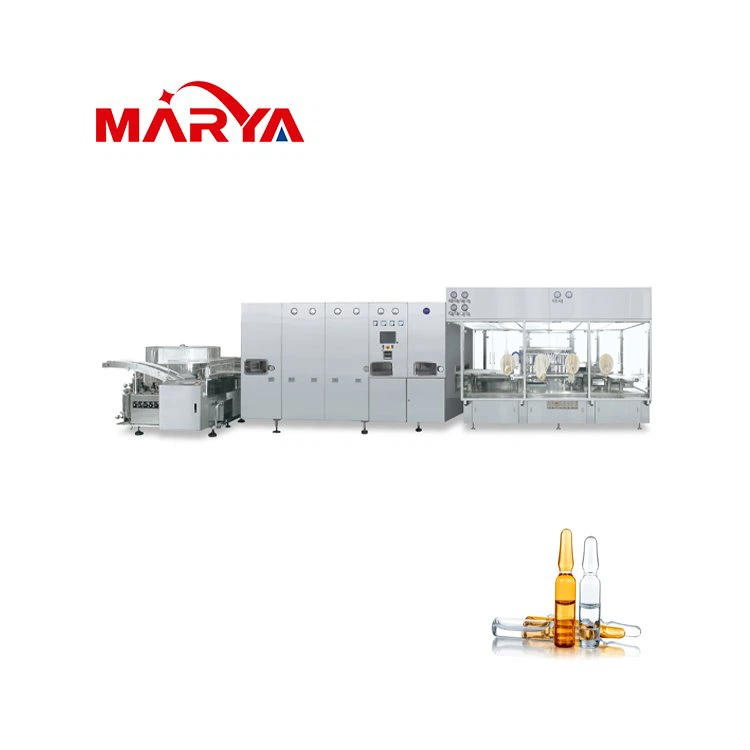
This machine is an ampoule filling and sealing machine, not only keeping the function and features of common ampoule filling and sealing machines, but also improves its overall general performance: only a few parts are required for replacement for filling 1-5ml ampoule.

The vial filling machine is a new product developed by our factory to adapt to the development of world's biological and blood product engineering. This machine has advanced control system, accurate filling, stable performance and beautiful appearance.

The vial powder filling machine can perform filling, stoppering and screw capping (capping) on glass bottles and plastic bottles. It adopts a closed high-precision cam-position device imported from Japan, with high precision, reliable operation and long service life.

The syrup filling machine is an all-in-one machine for filling and capping glass syrup bottles, glass infusion bottles or similar bottles.
Why Choose Us
Competitive pricing
We offer competitive pricing for our services without compromising on quality. Our prices are transparent, and we do not believe in hidden charges or fees.
Quality assurance
We have a rigorous quality assurance process in place to ensure that all our services meet the highest standards of quality. Our team of quality analysts checks each project thoroughly before it is delivered to the client.
Expertise and experience
Our team of experts have years of experience in delivering high quality services to our clients. We hire only the best professionals who have a proven track record of delivering exceptional results.
State-of-the-art technology
We use the latest technology and tools to deliver high quality services. Our team is well-versed in the and advancements in technology and uses them to provide the best results.
One-stop service
We promise to provide you with the fastest reply, the best price, the best quality, and the most complete after-sales service.
Customer satisfaction
We are committed to delivering high quality services that exceed our clients' expectations. We strive to ensure that our clients are satisfied with our services and work closely with them to ensure their needs are met.
Types of Pharmaceutical Filling Machines
There are several types of pharmaceutical filling machines available in the market, each designed for specific applications and production requirements. The most common types of filling machines include:
Volumetric Filling Machines
Volumetric filling machines are equipped with pistons or filling nozzles that measure and dispense a preset volume of liquid medication into containers. These machines are ideal for filling liquids of varying viscosities and can be used to fill a wide range of container sizes.
Peristaltic Filling Machines
Peristaltic filling machines use a rotating roller mechanism to transfer liquid medication from a reservoir to the containers. These machines are popular for their ability to maintain the sterility of the medication and prevent contamination, making them suitable for filling sensitive pharmaceutical products.
Auger Filling Machines
Auger filling machines are designed to fill dry powder medications into containers using a rotating screw mechanism. These machines are ideal for accurately filling powdered medications and have the capability to handle a wide range of container sizes.
Time Gravity Filling Machines
Time gravity filling machines rely on the force of gravity to fill containers with liquid medication. These machines are suitable for filling low-viscosity liquids and are commonly used for high-speed production lines.
Aseptic Filling Machines
Aseptic filling machines are designed to fill and seal containers in a sterile environment, ensuring that the medication remains free from contamination. These machines are essential for the production of injectable medications and other sterile pharmaceutical products.
How Do I Choose The Right Liquid Filling Machine
Does the liquid in question flow freely, or is it a higher viscosity? In general terms, the higher a liquid' s viscosity, the fewer filling options there are available.Free-flowing, low viscosity liquids can often be filled by either a volumetric system which uses a pneumatically powered piston to displace a predetermined amount of liquid, or by a vacuum filling system which uses a special filling nozzle arrangement to draw liquid into the bottle by suction.
The size, shape, and material a container is made from will influence the type of machine used to fill it. Most rigid plastic or glass bottle can be filled with thinner, free-flowing liquids via a vacuum-level filling machine, whilst jars, flexible bottles or pouches are likely to require a volumetric filling system. Large containers above 5-litres may require a volumetric system with a mobile 'Wander Nozzle' to allow the operator to fill the containers at ground level.
The level of accuracy required can also influence the choice of liquid filling system. In situations where the finished product is visible within the bottle and displayed in a retail environment, a vacuum level filling system may be appropriate because it will fill bottles to the same height, regardless of any differences from one container to another. This is particularly useful when filling glass bottles as the glass thickness can vary substantially.Where a consistent, dependable fill volume is required and the aesthetics of several bottles displayed side-by-side on a shelf is not important, a volumetric filling system will provide a greater level of accuracy (commonly +/-0.5%). Volumetric filling systems work with a wider range of viscosities and container types.
The number of containers to be filled has a direct correlation with the level of automation the suitable filling system should have. Production scales of a between a few dozen and a few hundred can – in many cases – be achieved using either a manual or semi-automatic filling system, whereas regular production runs upwards of 1,000 are likely to require a greater level of automation through the filling process to achieve a high enough production rate. Semi-automatic and manual filling systems tend to be quicker to clean and changeover for a different filling application than fully automatic filling systems.Production scales can be increased in several ways: conveyor systems to pass containers through the filling process automatically, multi-headed filling systems can fill up to 12 containers simultaneously, rotary infeed and outfeed tables can allow operators to place and remove numerous containers more rapidly. Additional systems can also be added such as capping and labelling to further increase production output.
Apart from the items listed above, there are a few other things to consider when choosing the right filling machine for your application. The type of liquid is a major factor. The contact parts within our filling machines are made from food- and pharmaceutical-grade 316 stainless steel.Hoses, internal seals and valve assemblies are often specified to suit the type of liquid to be filled, whether it be Whisky or printer ink, paint or car wax; the materials used within the filling system need to be specified to suit to avoid contamination or premature seal degradation and failure. For example, piston seals which can withstand the rigours of dispensing acids may not be accredited for use within food or drinks production.Another item influenced by the liquid type is the nozzles used. Nozzles are made to suit each application, container types and fill volume. Although often overlooked, the nozzle design can have a huge impact on the capability of a filling system to cleanly and efficiently fill containers time and again.

1. Before the filling machine is operated, check whether the safety facilities function normally.
2. Before starting the filling machine, carefully check whether there is water in all water tanks, whether the chain plate is stuck, whether there are sundries on the conveyor belt, whether there is a bottle cap in the box with a cap, and whether there are several barrels of water, electricity, and air, and wait for each item to be kicked out. After pressing READY, turn on the main power supply, the power indicator is on, the fault indicator and the emergency stop indicator are off. When the starting conditions are met, press the start button on the control box and the start switch of the refueling point. After the buzzer 3 gives an audible warning, the whole machine starts to run and enters the automatic working mode of washing, flushing and filling. After the machine stops, press the stop button and the control box at the filling place to stop the machine and turn off the main power supply.
3. Inspection before use of the filling machine: After the machine is installed, turn on the power, try to run the three-phase motor, ensure the correct direction of rotation, ensure the pressure and flow of compressed air, and check whether the motor and bearing need lubrication. It is strictly prohibited to operate with no oil. Start the machine after it is normal. Meanwhile, observe whether the fasteners of each component are loose. Before normal use, each component operates stably.
Pharmaceutical Filling Machine Process principle
The pharmaceutical filling machine is mainly composed of a body, a conveying device, a filling part, a dial device, a cap supply system, a capping head, a bottle outlet tray, a tracking filling mechanism, and a transmission device.
Transmission
The motor transmits the power to the worm gear shaft of the reducer through the belt pulley, and then the worm gear shaft passes the gears to transmit the power to the wheel shaft, the filling part, and the capping head. The filling part, capping head, and each dial move synchronously, and the power is transmitted to the bottle feeding dial device through the bevel gear.
Filling
Oral liquid bottles are sent from the large bottle-feeding wheel to the transition wheel, and then the transition wheel is sent to the timing belt, and the bottle is driven by the timing belt to move forward at a uniform speed. The filling needle is inserted into the mouth of the bottle under the control of the tracking mechanism and moves forward in synchronization with the bottle to realize tracking filling.
Lid supply
It consists of a lid conveying track, a lid arranging head, and a lid-wearing mechanism. The capping head adopts the principle of electromagnetic spiral oscillation to arrange the messy caps in a queue and send them to the cap feeding track. When passing through the capping mechanism, the bottle carries the cap through the capping plate to make the cap wear right.
Tracking filling mechanism
The filling needle is driven by the servo motor to make a reciprocating motion, and the filling needle can be accurately inserted into the bottle mouth by adjusting the relative position of the needle holder and the mounting frame.
Maintenance Pharmaceutical Filling Machine
Lubrication is Key
Regular lubrication of moving parts reduces friction, preventswear and tear, and extends the machine's lifespan. Use the lubricants recommended by the manufacturer to ensure compatibility.
Regular Inspections
Establish a regular inspection program to check for signs of wear, loose components, or any anomalies in the machine's operation. Early detection of potential issues can prevent costly repairs and downtime.
Prompt Parts Replacement
Keep an inventory of critical spare parts to avoid delays in case of a breakdown, most OEMs suggest a critical care parts kits when purchasing the machine. Identifying and replacing worn-out parts is essential in preventative maintenance.
Seal Replacement
Seals and gaskets frequently wear out in sauce filling machines, it's essential to regularly check and replace them immediately at first signs of deterioration. Replacing seals and gaskets will help to avoid leaks and ensure the precision and uniformity of your filling operation.
Prompt Parts Replacement
Keep an inventory of critical spare parts to avoid delays in case of a breakdown, most OEMs suggest a critical care parts kits when purchasing the machine. Identifying and replacing worn-out parts is essential in preventative maintenance.
Software Updates
Keep ntegrated software up to dated for bug fixes, performance improvements, and new features that can enhance machine operation.
Operator Training
Training operators on the correct use and maintenance of the filling machine is crucial. Misuse can lead to accidents, inefficiencies, and machine damage. Regular refresher courses can help keep operators informed about best practices.
Components of a Filling Machine
Product reservoir
The product reservoir holds the product that will be dispensed into the containers. It can vary in size and capacity depending on the specific requirements of the filling machine.
Conveyors
Conveyors are used to transport the containers to and from the filling machine. They ensure a smooth and continuous flow of containers, minimizing downtime.
Filling nozzles
Filling nozzles are responsible for dispensing the product into the containers. They are designed to provide precise and controlled filling, minimizing spillage and wastage.
Sensors and controls
Sensors and controls are essential components of a filling machine that monitor and regulate the filling process. They ensure accurate filling levels, detect any abnormalities or errors, and maintain the overall efficiency of the machine.
Hoppers
Hoppers are used to store and supply the product to be filled. They can vary in size and design depending on the type of product and filling machine.
Capping or sealing mechanisms
Some filling machines also include capping or sealing mechanisms that tightly seal the containers after filling. This ensures product integrity and prevents leakage or contamination.
Our Factory
Shanghai Marya Pharmaceutical Engineering and Project Co., Ltd. was founded in 2014 in Shanghai, China, is a total solution provider specializing in engineering design, clean room engineering, pharmaceutical engineering, pharmaceutical equipment, project management and verification and other technical services. We have three factories and a number of experts and technicians who have been engaged in pharmaceutical and medical industries for more than 20 years. Worriless and relieved solution for customer is our value proposition, we are consistently committed to helping clients to design and build clean workshops, pharmaceutical turnkey solutions.


Certifications


FAQ
Hot Tags: pharmaceutical filling machine, China pharmaceutical filling machine suppliers, manufacturers, factory, Purified Water System, Other Pharmaceutical Machine, Stability Test Chamber, Bottle Injection Moulding Machine, Stainless Steel Trays, Pharma Machine


