

Shanghai Marya Pharmaceutical Engineering and Project Co., Ltd.
Shanghai Marya Pharmaceutical Engineering and Project Co., Ltd. was founded in 2014 in Shanghai, China, is a total solution provider specializing in engineering design, clean room engineering, pharmaceutical engineering, pharmaceutical equipment, project management and verification and other technical services. We have three factories and a number of experts and technicians who have been engaged in pharmaceutical and medical industries for more than 20 years. Worriless and relieved solution for customer is our value proposition, we are consistently committed to helping clients to design and build clean workshops, pharmaceutical turnkey solutions.
Why Choose US
Production Equipment
We have strong technical force and excellent production equipment, including laser cutting machine, numerical control punching machine, numerical control bending machine, plate shearing machine, numerical control milling machine, automatic leveling machine, bending production line, automatic hollow glass window production line, automatic door plate strip sealing machine, automatic spraying production line and other processing equipment, as well as various precision testing instruments and equipments.
Product Market
Marya scope of business covers more than 60 countries and regions around the world, such as the United States, Russia, Bulgaria, Britain, Portugal, Poland, Switzerland, ltaly, New Zealand, Malta, Moldova, Malaysia, Uzbekistan, lran, Egypt, Saudi Arabia, UAE, Ecuador, Dominica, Panama, Uruguay, Argentina, Tanzania, Zimbabwe, Ethiopia, Indonesia, Bangladesh, and others, and we gained good reputation.
Rich Experience
Our experienced engineering team with more than 20 years experience in cleanroom design and construction can ensure that process and materials for your plant is designed and manufactured in the most cost-effective manner with reliablequality to fulfil GMP/FDA/ISO/SGS requirement.
Our Service
Continuous technical and service support:No matter what products and services you buy from our company, no matter when your project is completed, we will continue to provide you with operation, maintenance, spare parts supply and factory upgrading consulting services. If necessary, our technicians can provide technical support and services to all Marya customers directly or remotely.

Clean Room Sliding Door
Most of the clean room sliding doors are electric sliding doors, with multi-functional features, and their door bodies have strict requirements against wind load, suitable for installation on various factory building structures.

Features: Aluminum frame finished windows, stainless steel finished windows, steel frame finished windows

The Cleanroom floor should be made of hard material, good integrity, smooth and flat, non-cracking, wear-resistant, impact-resistant, not easy to accumulate static electricity, easy to clean and disinfect, and corrosion-resistant.

Cleanroom epoxy floor is a high-strength, wear-resistant, and beautiful floor with the advantages of no joints, solid texture, good chemical resistance, anti-corrosion, dust-proof, easy maintenance, and low maintenance costs.
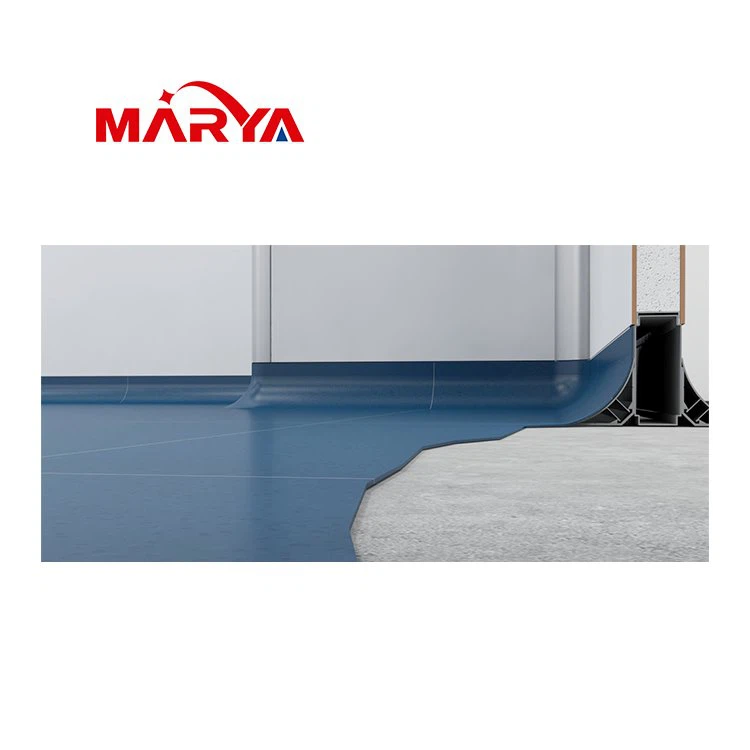
Cleanroom PVC floor is the floor produced with polyvinyl chloride material. It is specifically made of PVC and its copolymer resin as the main raw material, adding fillers, plasticizers, stabilizers
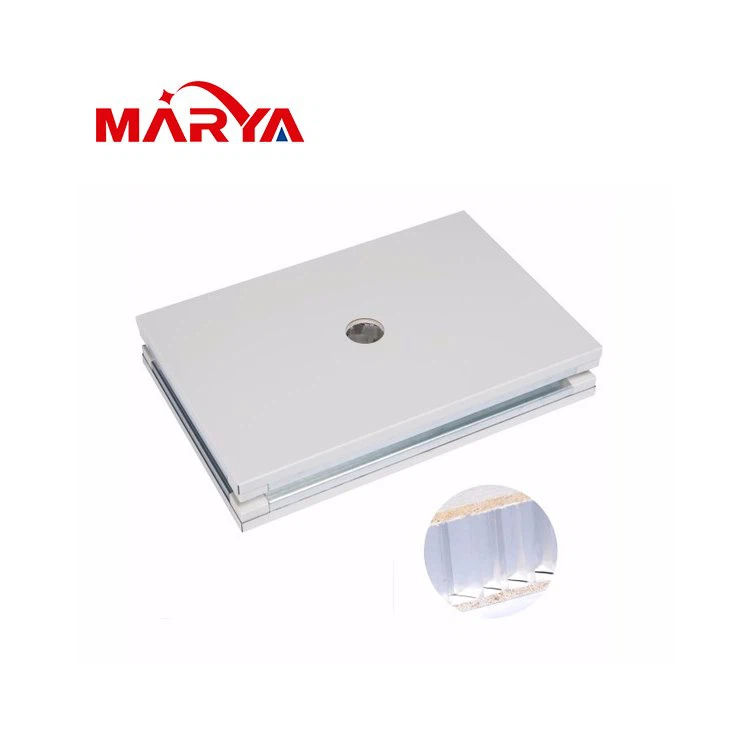
Clean room sandwich panel is also called cleanroom board, it is a composite board made of color coated board, stainless steel and other materials as the surface material.

Clean room doors are doors used in conjunction with clean room engineering, characterized by the ability to meet the general requirements of clean room specifications, such as non-corrosive, not easily dusted, easy to clean, no dead ends, etc.

Cleanroom PVC fast rolling door, also known as fast soft shutter door, is the door that runs at a speed of more than 0.6 meters per second, is a fast lifting barrier-free isolation door, the main role is to quickly isolate, thus ensuring the workshop air quality dust-free level.

It is used to maintain temperature, humidity, wind speed, air pressure and cleanliness class required in the clean room, the most commonly used method is to continuously send a certain amount of processed air into the clean room to eliminate internal and external heat and humidity interference and dust pollution.
HEPA is a type of pleated mechanical air filter. This type of air filter can theoretically remove at least 99.97% of dust, pollen, mold, bacteria, and any airborne particles with a size of 0.3 microns (µm). The diameter specification of 0.3 microns corresponds to the worst case; the most penetrating particle size (MPPS). Particles that are larger or smaller are trapped with even higher efficiency. Using the worst case particle size results in the worst case efficiency rating (i.e. 99.97% or better for all particle sizes).
Advantages of HEPA Filter
Destroy airborne pollutants that harm the body
Even though the air looks clear, it is full of tiny particles. Some of these, especially certain types of nanoparticles, can cause a wide range of health issues, ranging from lung cancer to asthma, allergies, lung fibrosis and more. In extreme cases, they can even damage your DNA. Hepa air filters remove nanoparticles from the air before you breathe them in, greatly minimizing these health risks.
Prevent the spread of viruses
Hepa filters combat aerosols and viruses by up to 99%. However, this requires using a highly advanced hepa filtration system, such as a medical-grade hepa filter. Keeping viruses and aerosols out of your home is important because they damage the respiratory system.
Eliminate bacteria
One of the major causes of sickness and illness is bacteria. The transmission of bacteria May occur via several routes, including, but not limited to, inhalation, absorption and consumption. In other words, if someone breathes in or consumes airborne germs, the bacteria can enter their respiratory system and then spread throughout their body, potentially causing an infection.
Relieve asthma symptoms
Asthma, a chronic, debilitating lung disease that severely restricts a person's ability to breathe, affects over one-third of the U.S. Population. While inhalers are useful for relieving symptoms, they do little to address the underlying issues that lead to asthma attacks. Allergens and pollutants in the air are the major causes of asthma episodes. Asthma sufferers who reside in a home with a hepa filter May benefit in several ways, including a decrease in the frequency and severity of asthma episodes and a reduction in the severity of asthma symptoms.

A HEPA filter is not like any regular air filter you typically put in your home. HEPA filters are pleated mechanical air filters that have a considerable thickness in order to capture the particulates. The pleats create a mat of fibers that are randomly arranged. The random, dense arrangement of fibers in the HEPA filter help to catch a range of particle sizes. As air particles pass through the air filter, they are caught by three mechanisms: Diffusion, interception, and impaction.
Diffusion occurs in a HEPA filter when the gas molecules that are smaller than 0.1 microns in size collide with each other and are delayed in passing through the filter. The delay will make it more likely for the next two mechanisms to occur for those smaller particles. Interception is when particles moving along the air stick to a fiber. Impaction, the third mechanism, is when the larger air particles embed directly into the fibers themselves.
In an attempt to extend the usage life of a HEPA, a pre-filter can be included in the set-up which helps to remove the larger particles, leaving the finer-sized particles to be caught by the HEPA filter.
How HEPA Filters are Made
HEPA filters are made from polyester, polypropylene, or fiberglass fibers that are tightly interlaced with diameters of less than one micron. The fibers are twisted, turned, scattered, and randomly placed in different directions to create a mesh maze without a straight true path.
The spaces between the fibers in a HEPA filter are smaller than half a micron, allowing the filter to capture particles smaller than 0.3 microns. The image below, taken from a microscopic view of HEPA filter fibers, clearly shows the irregular and non-uniform arrangement of the fibers.
The frame of a HEPA filter can be made from a variety of materials. For ones being used for industrial and manufacturing operations, the frames are normally made of tough, resilient, and durable materials such as carbon steel, aluminum, stainless steel, or galvanized steel. The size of the frame has to be carefully planned since its resistance to the airstream can increase the pressure drop.
Choosing the right adhesive for HEPA filter construction is crucial to ensure it does not impact the filter's performance. The adhesive must stay in place without migrating into the fiber material. Common adhesives for HEPA filters include polyurethane, silicone, and ceramic.
Polyurethane is often used in HEPA filters due to its suitability for the filtering process. It securely bonds the fiber material within metal frames and cures either at room temperature or through accelerated heat curing.
Silicone adhesives offer flexibility, temperature resistance, and come in various hardness levels, transparencies, and viscosities. They withstand shock, vibrations, heat, and corrosion and can also provide electrical insulation.
Ceramic adhesives form a strong bond between filter materials and metal frames, such as stainless steel or aluminum. They are ideal for HEPA filters and can secure various internal components.
Gaskets play a critical role in the performance of a HEPA filter and can be made from die cut urethane rubber and closed cell sponge rubber. The choice of rubber as a gasketing material is more economical and easier to install than liquid silicone systems.
To prevent mold release, the material is processed by splitting or skiving the top layer. Gaskets are then precisely cut from sheets or rolls to ensure they fit the required shape.
Common gasket shapes include strip, one-piece, and interlocking designs, with interlocking being the most cost-effective and easiest to install. Gaskets are affixed to the frame using solvent-activated or pressure-sensitive adhesives. The joints are sealed with RTV materials compatible with closed-cell rubbers.
The most commonly used gasket type is die-cut, which is attached to the outer edge of the frame and pressed against a flat surface. All HEPA filter gaskets are resistant to oil and ozone.
In HEPA filters, separators are positioned between the pleats or folds of the filter material. These separators, made from aluminum, glass fiber strings, or hotmelt, keep the pleats open. This design enhances particulate matter capture and reduces airflow resistance.
The description provided outlines the basic elements of HEPA filter design. However, each manufacturer may use proprietary methods and variations in their production processes, which can differ from this general overview.
HEPA filters are composed of a mat of randomly arranged fibers, typically made from fiberglass. The key factors affecting function are fiber diameter, filter thickness, and face velocity. The air space between HEPA filter fibers is much larger than 0.3 microns, enabling it to trap particles effectively. These filters can significantly improve indoor air quality, making them an essential part of allergy-proofing your home.
The interception mechanism in HEPA filters works when particles following a line of flow in the air stream come within one radius of a fiber and adhere to it. The impaction mechanism involves larger particles being unable to avoid fibers by following the curving contours of the air stream and are forced to embed in one of them directly; this effect increases with diminishing fiber separation and higher air flow velocity. The diffusion mechanism is a result of the collision with gas molecules by the smallest particles, especially those below 0.1 µm in diameter, which are thereby impeded and delayed in their path through the filter; this behavior is similar to Brownian motion and raises the probability that a particle will be stopped by either of the two mechanisms above; it becomes dominant at lower air flow velocities.

HEPA Filters in Hospitals
HEPA filters are crucial in hospitals to prevent cross-contamination and the spread of infectious diseases.
Surgical Suites
In operating rooms, maintaining clean and clear air is critical. HEPA filters are employed to eliminate airborne contaminants that could pose risks during surgical procedures when patients' organs are exposed.
Warming Beds
Warming beds in forced air systems help regulate patient temperature. HEPA filters in these systems capture dangerous particulate matter, ensuring it does not come into contact with the patient.
Incubators
Newborns, with their vulnerable immune systems, are at risk from airborne diseases. HEPA filters in incubators, especially in neonatal intensive care units, remove bacteria, viruses, and other infectious agents to ensure a sterile environment.
Laboratories
Laboratories, similar to clean rooms, handle hazardous pathogens and require HEPA filters to meet legal standards. These filters are essential for removing microbes and contaminants, preventing their spread beyond the testing environment.
Levels of HEPA Filtration
HEPA-Type Filters (Grade E): These filters catch about 99% of particles. They are cost-effective and work well for everyday use, like in affordable air purifiers and vacuum cleaners. Think of them as the reliable team members suitable for common spaces.
True HEPA Filters (Grade H): Standard in many places, these filters capture 99.97% of tiny particles. They are the go-to choice for homes and businesses, ensuring the air is clean and healthy. True HEPA filters are like the dependable players in the indoor air quality game.
Absolute HEPA Filters (Grade A): These filters are top-notch, trapping 99.99% or more of particles. They shine in places where the air must be super clean, such as hospitals. Absolute HEPA filters are the specialists, maintaining purity in critical environments.
Ultra-HEPA Filters (Grade U): Going above and beyond, these filters boast an efficiency of more than 99.999%. Found in special places like labs, they ensure the air is exceptionally pure. Ultra-HEPA filters are the experts, providing an extra level of cleanliness.
Tips for Maintaining a Clean HEPA Filter
Remove the HEPA Filter: Carefully remove the HEPA filter from the unit following the manufacturer's instructions. If you're unsure, consult the user manual for guidance.
Vacuum the Surface: Use a vacuum cleaner with a brush attachment to gently remove loose particles from the surface of the HEPA filter. Ensure thorough coverage, paying extra attention to the folds and crevices.
Brush Away Residual Dirt: Take a soft brush or a clean, dry paintbrush and delicately brush away any remaining dirt or debris. Be gentle to avoid damaging the delicate fibers of the HEPA filter.
Wash with Mild Detergent: If your HEPA filter is washable, prepare a mixture of mild detergent and water. Gently wash the filter, taking care not to wring or twist it. Rinse thoroughly and let it air dry completely before reinserting.
Dry Completely Before Reinstalling: Ensure the HEPA filter is completely dry before reinstalling it into the air purifier or HVAC system. Damp filters can lead to mold growth and compromise air quality.
Maintaining:
Regular Inspections: Periodically check the filter for visible dirt and debris. If you notice a significant buildup, it's time for cleaning.
Follow Manufacturer Guidelines: Always refer to the manufacturer's instructions for cleaning and maintenance. Different models may have specific requirements.
Schedule Routine Cleanings: Establish a regular cleaning schedule based on your environment. Homes with pets or high pollen levels may require more frequent cleaning.
Replacement Consideration: If your HEPA filter is not washable, consider replacing it according to the manufacturer's recommendations. This ensures optimal performance.
FAQ
Hot Tags: hepa filter, China hepa filter suppliers, manufacturers, factory, Weighing Booth, Stability Test Chamber, Cleanroom System, VHP Pass Box, VHP Generator, Cleanroom Trolley


