

Hey there! As a supplier of Sampling Booths, I've seen firsthand how crucial it is to control static electricity in these environments. Static electricity can cause a whole bunch of problems, from attracting dust and contaminants to potentially damaging sensitive samples. So, let's dive into how a sampling booth can effectively control static electricity.
Understanding Static Electricity
First off, let's get a quick understanding of what static electricity is. Static electricity is basically an imbalance of electric charges within or on the surface of a material. It occurs when there's a transfer of electrons between two objects that come into contact and then separate. In a sampling booth, this can happen when personnel move around, equipment rubs against surfaces, or even when air currents cause friction.
The Risks of Static Electricity in a Sampling Booth
In a sampling booth, static electricity can pose several risks. For one, it can attract dust and other particulate matter, which can contaminate the samples being handled. This is especially problematic in industries like pharmaceuticals, food and beverage, and electronics, where even the tiniest particle can affect the quality and integrity of the product.
Static electricity can also cause damage to sensitive electronic components. If a static charge builds up and then discharges suddenly, it can fry delicate circuits and render the equipment useless. This not only costs money to repair or replace but can also cause delays in the sampling process.
How Sampling Booths Control Static Electricity
So, how do sampling booths tackle this static electricity issue? Well, there are several methods and technologies that are commonly used, and I'll break them down for you.
Antistatic Materials
One of the most basic ways to control static electricity is by using antistatic materials in the construction of the sampling booth. These materials are designed to prevent the build-up of static charges by allowing the electrons to flow more freely. For example, the walls and floors of the booth can be made from antistatic plastic or coated with an antistatic finish. This helps to dissipate any static charges that might otherwise accumulate on the surfaces.
Ionization
Ionization is another popular method for controlling static electricity in a sampling booth. Ionizers work by emitting a stream of positively and negatively charged ions into the air. These ions neutralize any static charges on objects and surfaces within the booth. There are two main types of ionizers: corona discharge ionizers and photoelectric ionizers.
Corona discharge ionizers use a high voltage to create a corona discharge, which in turn generates ions. These ionizers are relatively inexpensive and easy to install, but they can produce ozone as a by-product, which can be harmful to human health and may also react with certain chemicals.
Photoelectric ionizers, on the other hand, use ultraviolet light to generate ions. They are more expensive than corona discharge ionizers, but they do not produce ozone, making them a safer option for use in sampling booths.
Grounding
Grounding is a simple but effective way to control static electricity. By connecting the sampling booth to a grounding rod or other grounding point, any static charges that build up on the booth or its equipment can be safely discharged into the ground. This helps to prevent the build-up of static charges and reduces the risk of electrostatic discharge (ESD).
All metal components of the sampling booth, such as the frame, shelves, and equipment, should be properly grounded. Personnel working in the booth should also be grounded by wearing grounding straps or shoes with conductive soles.
Airflow Control
Proper airflow control is also important for controlling static electricity in a sampling booth. By maintaining a steady and controlled airflow, it helps to reduce the friction between surfaces and objects, which in turn reduces the risk of static charge build-up.
A well-designed sampling booth will have a ventilation system that provides a laminar airflow. This means that the air flows in a straight, parallel path, with minimal turbulence. Laminar airflow helps to carry away any dust and contaminants that might be attracted by static charges, as well as preventing the build-up of static charges on surfaces.
The Importance of Choosing the Right Sampling Booth
When it comes to controlling static electricity in a sampling booth, choosing the right booth is crucial. You need to make sure that the booth is designed and constructed with the appropriate materials and technologies to effectively control static electricity.
For example, if you're working in an industry that requires a high level of cleanliness, you might want to consider a booth that is equipped with Clean Room FFU. These units are designed to provide a high level of air filtration and can help to reduce the presence of dust and other particulate matter in the booth, which in turn helps to control static electricity.
If you're dealing with powders or other dry materials, a Weighing Booth might be a better option. These booths are specifically designed to handle the unique challenges of weighing and dispensing powders, including controlling static electricity.
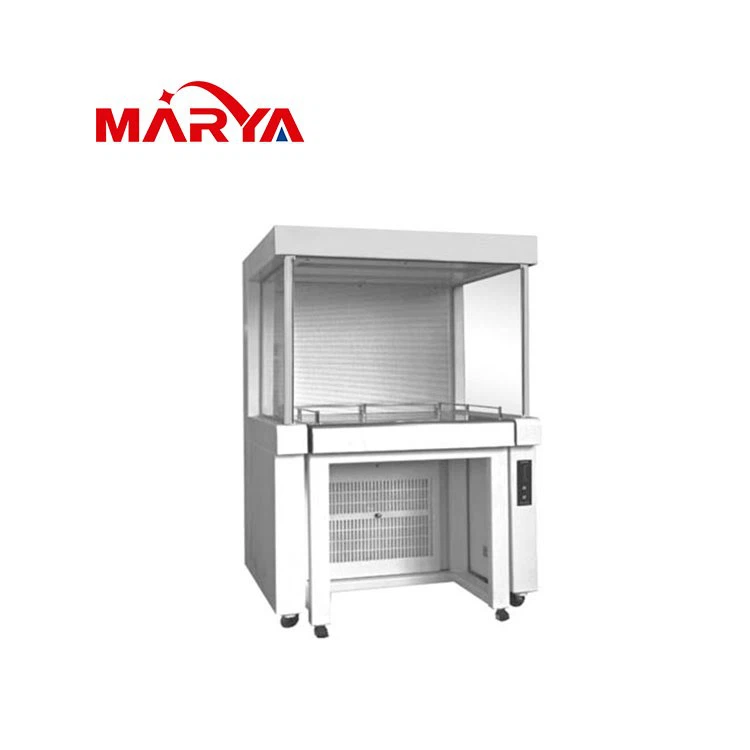
And if you need a more compact and versatile solution, a Clean Bench could be the way to go. These benches provide a clean and controlled environment for sampling and other laboratory operations, and they can be equipped with various features to control static electricity.
Conclusion
In conclusion, controlling static electricity is essential for the proper functioning of a sampling booth. By using antistatic materials, ionization, grounding, and airflow control, you can effectively reduce the risk of static charge build-up and the associated problems.

If you're in the market for a sampling booth and want to ensure that it has the right static electricity control features, don't hesitate to reach out. We're here to help you find the best solution for your specific needs and application. Let's start a conversation about how we can make your sampling process more efficient and reliable.
References
- Principles of Electrostatics. Springer, 2011.
- Handbook of Cleanroom Technology. Wiley, 2018.
- Introduction to Air Sampling and Analysis. Academic Press, 2015.