

Hey there! As a supplier of HEPA Boxes, I often get asked this burning question: "Can a HEPA Box remove all types of pollutants?" Well, let's dive right into it and break things down.
First off, what the heck is a HEPA Box? HEPA stands for High - Efficiency Particulate Air. A HEPA Box is a filtration device that uses a HEPA filter to trap and remove particles from the air. These boxes are super popular in various settings, from cleanrooms to home air purifiers.
Let's talk about what a HEPA Box can do really well. HEPA filters are designed to capture at least 99.97% of particles that are 0.3 microns in diameter. That's incredibly efficient! Particles like dust, pollen, mold spores, and pet dander are all on the menu for a HEPA Box. For folks with allergies or asthma, this is a game - changer. You can breathe a whole lot easier knowing that these common pollutants are being snatched out of the air.
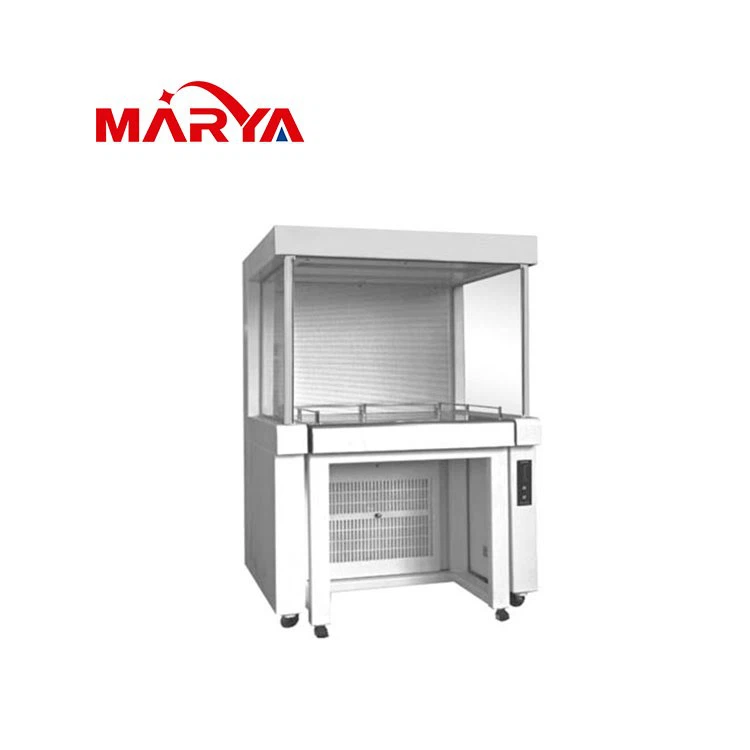
In a cleanroom environment, HEPA Boxes play a crucial role. They help maintain the strict air quality standards required for manufacturing processes. Whether it's in the production of microchips or pharmaceuticals, having clean air is non - negotiable. The HEPA Box ensures that the air is free from contaminants that could mess up these delicate operations. And here's a cool fact: cleanrooms often use multiple HEPA Boxes in combination with other Clean Bench to create a comprehensive air - cleaning system.
But here's the catch: a HEPA Box can't remove all types of pollutants. Gaseous pollutants, for example, are a whole different ballgame. Things like volatile organic compounds (VOCs), which can come from paints, cleaning products, and even some furniture, are too small and chemically different for a HEPA filter to capture. VOCs are molecules, and HEPA filters are designed to trap solid or liquid particles. So, if you're dealing with a lot of VOCs in your environment, a HEPA Box alone won't cut it.
Another limitation is that HEPA Boxes aren't effective against microorganisms like viruses and bacteria in all cases. While they can trap some larger bacteria and virus - laden droplets, some viruses are so tiny that they can slip through the filter. And just because a particle is trapped in the filter doesn't mean the microorganism is dead. In a healthcare setting, additional measures like UV - light disinfection or chemical treatments are often needed along with HEPA Boxes to ensure a truly germ - free environment.
Now, let's look at how a HEPA Box fits into a larger air - cleaning setup. In addition to dealing with gaseous pollutants, you might want to consider using activated carbon filters. These filters are great at adsorbing VOCs and other odors. You can pair an activated carbon filter with a HEPA Box to create a more well - rounded air - purification system.
In industrial settings, where there are different types of pollutants, the air - cleaning strategy can be even more complex. For example, in a manufacturing facility that uses a lot of chemicals, you might need to have Dispensing Booth to handle the initial release of pollutants at the source, along with HEPA Boxes to clean the general air in the area. And Stainless Steel Trays can be used to keep the work area clean and reduce the amount of dust and debris that gets into the air.
When it comes to choosing the right HEPA Box for your needs, there are a few things to keep in mind. The size of the space is a big factor. A small HEPA Box might be fine for a bedroom, but you'll need a much larger and more powerful one for a large office or a factory floor. You also need to consider the air - change rate. This is how many times the air in the room is completely replaced with filtered air per hour. A higher air - change rate means better air quality, but it also means more energy consumption.
So, to sum it all up, a HEPA Box is an amazing tool for removing a wide range of particulate pollutants from the air. It's a must - have in many cleanroom and indoor air - quality applications. However, it's not a one - size - fits - all solution. To get the best air quality, you need to understand the types of pollutants in your environment and combine the HEPA Box with other air - cleaning technologies as needed.
If you're in the market for a HEPA Box or have questions about creating a comprehensive air - purification system, I'm here to help. Whether you're a small business owner looking to improve your workspace air quality or a large corporation in need of industrial - grade solutions, we can work together to find the right fit. Reach out to me, and let's start a conversation about getting the cleanest air possible for your specific situation.
References

- "Fundamentals of Air Pollution" by John H. Seinfeld and Spyros N. Pandis
- "Cleanroom Technology" by Klaus F. Dielmann
- Various industry reports on air - filtration technologies