

Shanghai Marya Pharmaceutical Engineering and Project Co., Ltd.
Shanghai Marya Pharmaceutical Engineering and Project Co., Ltd. was founded in 2014 in Shanghai, China, is a total solution provider specializing in engineering design, clean room engineering, pharmaceutical engineering, pharmaceutical equipment, project management and verification and other technical services. We have three factories and a number of experts and technicians who have been engaged in pharmaceutical and medical industries for more than 20 years. Worriless and relieved solution for customer is our value proposition, we are consistently committed to helping clients to design and build clean workshops, pharmaceutical turnkey solutions.
Why Choose US
Production Equipment
We have strong technical force and excellent production equipment, including laser cutting machine, numerical control punching machine, numerical control bending machine, plate shearing machine, numerical control milling machine, automatic leveling machine, bending production line, automatic hollow glass window production line, automatic door plate strip sealing machine, automatic spraying production line and other processing equipment, as well as various precision testing instruments and equipments.
Product Market
Marya scope of business covers more than 60 countries and regions around the world, such as the United States, Russia, Bulgaria, Britain, Portugal, Poland, Switzerland, ltaly, New Zealand, Malta, Moldova, Malaysia, Uzbekistan, lran, Egypt, Saudi Arabia, UAE, Ecuador, Dominica, Panama, Uruguay, Argentina, Tanzania, Zimbabwe, Ethiopia, Indonesia, Bangladesh, and others, and we gained good reputation.
Rich Experience
Our experienced engineering team with more than 20 years experience in cleanroom design and construction can ensure that process and materials for your plant is designed and manufactured in the most cost-effective manner with reliablequality to fulfil GMP/FDA/ISO/SGS requirement.
Our Service
Continuous technical and service support:No matter what products and services you buy from our company, no matter when your project is completed, we will continue to provide you with operation, maintenance, spare parts supply and factory upgrading consulting services. If necessary, our technicians can provide technical support and services to all Marya customers directly or remotely.

Most of the clean room sliding doors are electric sliding doors, with multi-functional features, and their door bodies have strict requirements against wind load, suitable for installation on various factory building structures.

Features: Aluminum frame finished windows, stainless steel finished windows, steel frame finished windows

The Cleanroom floor should be made of hard material, good integrity, smooth and flat, non-cracking, wear-resistant, impact-resistant, not easy to accumulate static electricity, easy to clean and disinfect, and corrosion-resistant.

Cleanroom epoxy floor is a high-strength, wear-resistant, and beautiful floor with the advantages of no joints, solid texture, good chemical resistance, anti-corrosion, dust-proof, easy maintenance, and low maintenance costs.
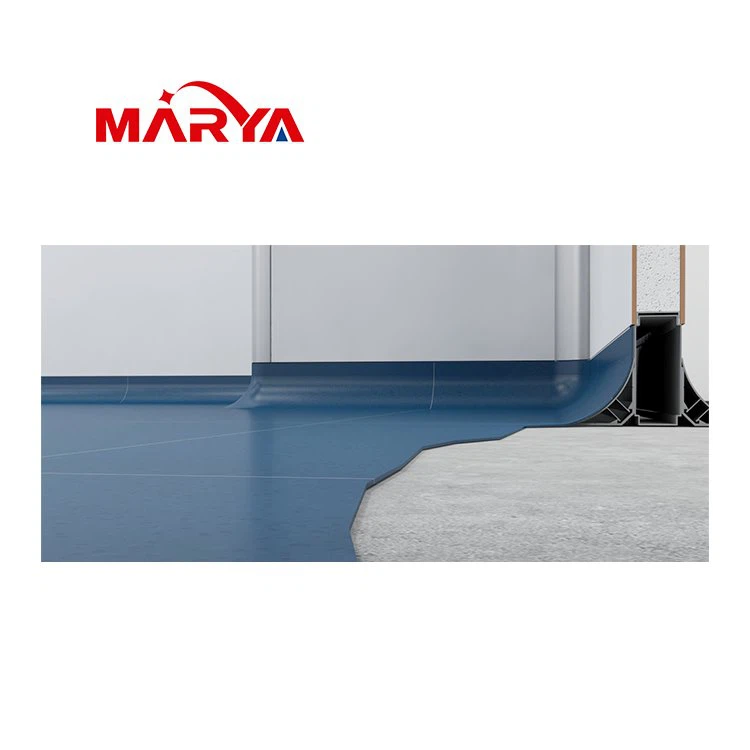
Cleanroom PVC floor is the floor produced with polyvinyl chloride material. It is specifically made of PVC and its copolymer resin as the main raw material, adding fillers, plasticizers, stabilizers

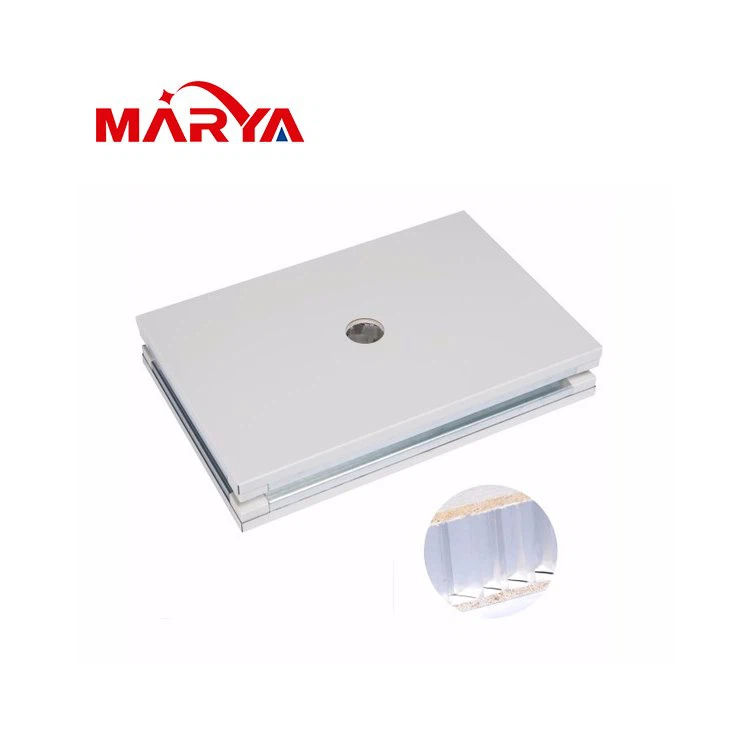
Clean room sandwich panel is also called cleanroom board, it is a composite board made of color coated board, stainless steel and other materials as the surface material.

Clean room doors are doors used in conjunction with clean room engineering, characterized by the ability to meet the general requirements of clean room specifications, such as non-corrosive, not easily dusted, easy to clean, no dead ends, etc.

Cleanroom PVC fast rolling door, also known as fast soft shutter door, is the door that runs at a speed of more than 0.6 meters per second, is a fast lifting barrier-free isolation door, the main role is to quickly isolate, thus ensuring the workshop air quality dust-free level.
What is Clean Room Sandwich Panel
Clean room sandwich panels are main products in clean room engineering, which are flame retardant, soundproof and environmentally friendly. The Clean room panel is made up of two layers of metal panels and a functional material from the middle. It has the characteristics of easy installation, light weight and environmental protection. Moreover, the functional materials used for filling can be chosen according to different environments and production requirements. Currently, the core functional materials we can provide are: PU, PIR, Rock Wool, Aluminum Honeycomb, Paper Honeycomb, Magnesium and etc.
Advantages of Clean Room Sandwich Panel
Advanced Composition: The Clean Room Sandwich Panel comprises two superior metal sheets and a core substance. The core material, which is often comprised of rock wool, polyurethane, or expanded polystyrene (EPS), offers excellent thermal insulation and soundproofing properties.
Seamless Integration: The panels' interlocking edges make installation simple and seamless. The little air leakage from the tight connections is essential for maintaining the necessary cleanroom conditions.
High Structural Strength: These panels are extremely durable despite their small weight, enabling them to endure high-pressure differences and keep their integrity over time.
Fire resistance: In cleanroom environments, safety is of the utmost importance. The Clean Room Sandwich Panel's strong fire-resistant qualities provide an additional safety layer.
Customizable: We know that every industry has its own specific needs. You may tailor your cleanroom to meet certain demands by choosing from a range of thicknesses and sizes for our Clean Room Sandwich Panel.
Cleanroom panel:
A clean room's surface of the wall and ceiling should be smooth, flat, free from dust, and easy to clean using a dust removal procedure.
Resistance from Corrosion:
Clean rooms usually need to be washed very often. In addition to cleaning with water, disinfectant water or alcohol is also used to disinfect the rooms. The liquids contain several harsh chemicals, which might discolour and fall off certain materials on the surfaces so; we need the cleanroom accessories to be corrosion resistive.
Weather Proof
Biological clean rooms like the operating rooms that are generally equipped with O₃ generators which are used for sterilization. This can accelerate the oxidation or corrosion of the objects such as metals in the environment. This will further lead to fading and discoloration of the general coating surface because of oxidation. Therefore, these kinds of cleanrooms require that their decorative accessories should have good resistance for oxidation and will not produce rust.
Construction of the room
The cleanroom structure must be made using sealing measures that are reliable and leave no construction gaps in between clean room doors and windows, ceilings, walls, floor surfaces.
Colour of cleanrooms
The colour of the clean rooms must be light and gentle, giving workers a comfortable environment to work in. Always go for soothing colours that are not too vibrant for a workspace. You don't want the technicians getting distracted by the interiors in such a focused environment.
Installation of Clean Room Sandwich Panels
The cleanroom sandwich panel installation is the same as other types of sandwich panels. However, due to the use of this type of sandwich panel in places that are sensitive, you must pay attention to things such as the absence of air penetration, the absence of insects, and keeping it at a suitable temperature.
One of the equipments needed to install cleanroom sandwich panels is the sandwich panel runner, which is used to frame the sandwich panel and is installed in line with the wall sandwich panel to fix the wall panel.
Of course, it should be noted that wall sandwich panel are used for the walls and ceilings of clean rooms such as cold storage, and the way these panels are installed affects the quality and efficiency of the structure; Therefore, the skill and expertise of the sandwich panel installation team is very important here. To install the clean room sandwich panel, the following steps must be done:
Calculation of the required square footage of the clean room sandwich panel based on the size of the room and the height of the walls.
Installing metal frames in the walls and ceiling vertically and horizontally.
Placing the sandwich panels on the frames and gluing them together using special screws.
Sealing at the junction of two sandwich panels.
Using flashing and performing final operations to prevent air and moisture from entering the clean room.
Due to the sensitivity of the clean room environment, sandwich panels are used in its construction, so for its installation, it is better to refer to a company specializing in this field and use their services. The Asia Panel team is a specialist in the implementation of clean room projects.
Technical Parameters
|
Product name |
Clean room sandwich panel |
|
Material of interlayer |
PU, EPS, rock wool, glass cotton, paper honeycomb, aluminum plate, glass magnesium sheet, paper honeycomb |
|
Thickness of interlayer |
50/75/100/150mm |
|
Material of steel sheet |
Color/ stainless steel |
|
Thickness of color steel sheet |
0.2-1.0mm |
|
Color of top / back steel |
Any RAL Colors ,usually white-gray/sea blue/red; customized |
|
Density of interlayer |
30-60KG/CBM |
|
Length |
Customized |
|
Sound insulation |
21.5 dB(A) |
PUF (Poly Urethane Foam): It is the most commonly used insulation material in the industry that offers a balance of thermal insulation property as well as low weight and economical option. It has a density of 42 Kg/m3, and K-Value of 0.021, R-Value of 5.6-7 per inch.
PIR ( Poly Isocyanurate): Due to recent developments in insulation material, there has been an immense interest in PIR as its density is around 45 Kg/m3. Also, its R-Value is 5.6-7 per inch, and K-Value is 0.021, making it a lighter option against PUF. Further, the temperature resistance is beyond 200 C makes it a highperformance insulation material over PUF.
Rockwool: A mineral-based fibre mass that can be highly resistant to temperature variations, Rockwool has a density of 48 - 160 Kg/m3, and K-Value of 0.035, and R-Value of 3.3 per inch. Hence this is the most desirable option that offers multiple advantages of sound, thermal and fire resistance up to eight hours depending on thickness.
Skin/Sufaces used in Sandwich Panels: Surface Finish is crucial to cleanroom panel selection as each surface can present a unique challenge and impact the production process.
SS finish (Stainless Steel) :Sandwich panels also are made from SS 304, provide excellent corrosion resistance to cope up with the fumes of various chemicals generated during processing. The SS 304 panels not only work well in harsh environments but are easy to disinfect and clean even with chemicals of varying pH levels during a batch change over in facility.
How to Install Sandwich Panels for Cleanrooms: A Step-by-Step Guide
Installing sandwich panels for cleanrooms requires precision and careful planning to ensure optimal performance. These panels play a critical role in maintaining the controlled environment needed for sensitive processes. We'll walk you through the key steps for installing cleanroom sandwich panels effectively and efficiently.
Prepare the Installation Area
Clear the Space: Before beginning installation, ensure the cleanroom area is free of debris and any obstructions that could interfere with the process.
Verify Measurements: Double-check the dimensions of the room and compare them with the sandwich panel specifications. This helps avoid errors and ensures a smooth installation.
Organize the Panels and Tools
Lay Out the Panels: Organize the sandwich panels in the order they'll be installed. Group panels by size and position.
Gather Necessary Tools: Ensure you have the following tools on hand:Level and tape measureDrill with appropriate bitsAdhesive and sealantScrews or boltsProtective equipment (gloves, helmets, etc.)
Begin with the Wall Panels
Position the First Panel: Start at a corner, aligning the first wall panel with the floor and ceiling tracks. Ensure it's level before securing it.
Secure the Panel: Use screws or bolts to fasten the panel to the framing system, being careful to avoid overtightening, which could damage the panel.
Continue Panel Placement: Install the remaining panels in sequence, ensuring each one fits snugly with the previous panel to avoid gaps.
Seal the Joints: Apply adhesive or sealant between panels to create an airtight seal, which is crucial for maintaining the cleanroom's controlled environment.
Install the Ceiling Panels
Prepare the Support Structure: Ensure the ceiling grid or support system is securely in place before installing the ceiling panels.
Lift and Place Panels: Carefully position the ceiling panels on the support structure, ensuring they align with the wall panels.
Seal the Perimeter: Use the appropriate sealant to seal the ceiling joints, ensuring there are no gaps where air can flow.
Final Inspections and Adjustments
Check Seals and Alignment: Once the installation is complete, check all joints, seals, and panel alignment to ensure the panels fit tightly and securely.
Perform a Cleanroom Test: After installation, conduct a pressure and cleanliness test to ensure the panels maintain the cleanroom environment standards.
How to Clean Clean Room Sandwich Panels
Don't use hard chemicals or solvents: Harsh chemicals and solvents can damage the outside of sandwich panels and make your clean room less functional. Because of this, it's best to avoid chemicals and solvents altogether. If you do need to use something other than water to remove build up or stains, ensure the ph of the product is between 5 and 9, this isn't too acidic or too alkaline.
After you use any chemical though, no matter how mild, give the sandwich panels a thorough rinse with clean water to ensure no chemicals stay on the surface.
Rinse clean room panels with clean water from top to bottom: As mentioned, thoroughly rinse clean room sandwich panels after using any kind of cleaning product on them. With that being said, often sandwich panels don't even need anything other than water to rinse off dirty and dust.
When rinsing clean room sandwich panels, whether it's to remove cleaning chemicals or for a light clean, make sure you rinse the panels from top to bottom. This will allow anything sitting on the panel walls to be rinsed onto the floor and be completely removed from the panel itself.
Avoid high pressure cleaning of sandwich panels: Just like with harsh chemicals, high pressure cleaning, even with just water, can also damage the outside of sandwich panels. If pressure needs to be used to remove stubborn build up, ensure the nozzle is at least 30 cm away from the surface of the sandwich panel and keep the pressure to a minimum.
When spraying sandwich panels with any kind of pressure, even light pressure, don't spray into the panel joints. Even the best sealed panel joints can't withstand high pressures trying to work into them.
Don't use high temperature steam cleaning: Like high pressure cleaning and chemicals, steam cleaning can also cause damage to clean room sandwich panels. However, lower temperature steam cleaning is usually fine for cleaning clean room sandwich panels. Generally if you keep it below 50 degrees celsius for steam cleaning, your panels shouldn't be damaged, but it May be best to check with your sandwich panel manufacturer on this.
Clean clean room sandwich panels frequently: Heavy scrubbing can damage clean room panels, and because of this, frequent cleaning can ensure there's not a large amount of build up that requires heavier scrubbing or products that May potentially damage expensive parts of your clean room's insulation.
As with many things, prevention is better than the cure, so staying ahead of cleaning before if becomes a problem will ultimately make everything easier. And you'll have a cleaner clean room because of it.
Get maintenance issues sorted quickly:While this is less an issue to do with cleaning clean rooms, keeping on top of sandwich panel maintenance is just as important as cleaning. If you've damaged a sandwich panel by mistake while cleaning it, get it repaired right away. Poorly maintained clean room sandwich panels can make your clean room inefficient or non-operational, which can cost more money long term.
FAQ
Hot Tags: clean room sandwich panel, China clean room sandwich panel suppliers, manufacturers, factory, Clean Room Sliding Door, Clean Room Equipment, Clean Room Sandwich Panel, Cleanroom Window, Cleanroom Floor, Cleanroom Epoxy Floor


