

What is the Standard Thickness of a Cleanroom Window?
As a supplier of cleanroom windows, I often encounter questions from clients regarding the standard thickness of cleanroom windows. Cleanrooms are highly specialized environments used in industries such as pharmaceuticals, electronics manufacturing, and biotechnology, where maintaining a controlled level of contamination is crucial. Windows in cleanrooms serve not only as a means of visibility but also as a critical component in maintaining the integrity of the cleanroom environment.
Factors Influencing the Thickness of Cleanroom Windows
The thickness of a cleanroom window is determined by several factors, each of which plays a significant role in ensuring the window's performance and functionality within the cleanroom.
- Structural Integrity: Cleanroom windows must be able to withstand the pressure differentials that can occur between the cleanroom and the surrounding environment. In high - pressure cleanrooms, such as those used in semiconductor manufacturing, thicker windows are required to prevent deformation or breakage. For example, in a cleanroom with a significant positive pressure to keep out contaminants, a window with a greater thickness can better resist the forces acting on it.
- Contamination Control: The thickness of the window can impact its ability to prevent the ingress of contaminants. A thicker window may provide a more effective barrier against particles and microorganisms, reducing the risk of contamination within the cleanroom. This is particularly important in industries where even the smallest particle can cause defects in the products being manufactured.
- Acoustic and Thermal Insulation: Cleanrooms often require a certain level of acoustic and thermal insulation. Thicker windows can offer better insulation properties, reducing noise transmission and maintaining a stable temperature within the cleanroom. This is beneficial for both the comfort of the personnel working inside the cleanroom and the stability of the manufacturing processes.
- Optical Clarity: While not directly related to thickness, the quality of the window material and its thickness can affect optical clarity. In some applications, such as microscopy or visual inspection, clear and distortion - free viewing through the window is essential. A well - designed window with an appropriate thickness can ensure that the view is unobstructed and accurate.
Standard Thickness Ranges
There is no one - size - fits - all standard thickness for cleanroom windows, as it depends on the specific requirements of the cleanroom. However, in general, cleanroom windows typically range from 6mm to 25mm in thickness.
- 6mm - 10mm: Windows in this thickness range are commonly used in low - pressure cleanrooms or areas where the requirements for structural integrity and insulation are not extremely high. They are suitable for applications such as small research laboratories or cleanrooms with minimal pressure differentials.
- 10mm - 15mm: This is a more common thickness range for medium - pressure cleanrooms. These windows offer a good balance between structural strength, contamination control, and insulation properties. They are often used in industries such as pharmaceuticals and food processing.
- 15mm - 25mm: Windows in this thicker range are reserved for high - pressure cleanrooms, such as those in semiconductor fabrication facilities. They provide the highest level of structural integrity and are capable of withstanding significant pressure differentials.
Material Selection and Thickness
The choice of material for the cleanroom window also influences the appropriate thickness. The most common materials used for cleanroom windows are tempered glass and polycarbonate.
- Tempered Glass: Tempered glass is a popular choice due to its high strength and scratch resistance. For tempered glass cleanroom windows, a thickness of 8mm - 12mm is often sufficient for medium - pressure cleanrooms, while 15mm - 25mm may be required for high - pressure applications. Tempered glass provides excellent optical clarity and is relatively easy to clean, making it suitable for cleanroom environments.
- Polycarbonate: Polycarbonate is a lightweight and impact - resistant material. It is often used in applications where there is a risk of physical impact, such as in cleanrooms with moving equipment. Polycarbonate windows can be thinner than glass windows while still providing adequate structural integrity. A thickness of 6mm - 10mm may be sufficient for many cleanroom applications, although thicker polycarbonate windows can also be used for higher - pressure environments.
Compatibility with Other Cleanroom Components
When selecting the thickness of a cleanroom window, it is important to consider its compatibility with other cleanroom components. For example, the window must fit properly into the wall system of the cleanroom. The wall panels used in cleanrooms, such as Hvac Cleanrrom Sandwich Panel and Clean Room Sandwich Panel, have specific installation requirements, and the window thickness should be chosen to ensure a seamless fit.

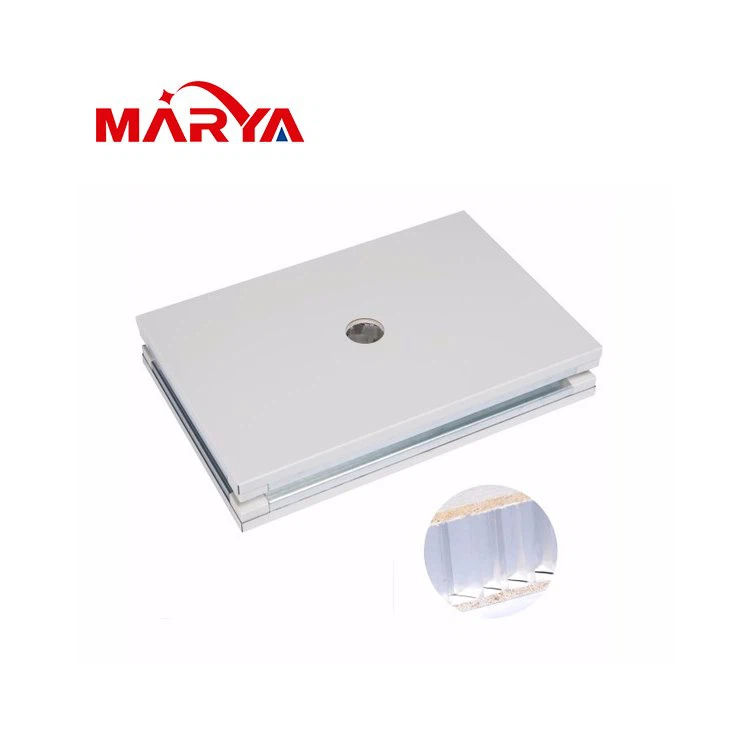
Similarly, the window should be compatible with the cleanroom flooring, such as Cleanroom PVC Floor. A well - integrated cleanroom design ensures that all components work together to maintain the desired level of cleanliness and functionality.
Customization and Consultation
At our company, we understand that every cleanroom project is unique, and the standard thickness ranges may not always meet the specific needs of our clients. That's why we offer customized cleanroom window solutions. Our team of experts can work closely with you to understand your cleanroom requirements, including pressure differentials, contamination control needs, and insulation requirements. Based on this information, we can recommend the most appropriate window thickness and material for your project.
If you are in the process of planning a cleanroom or need to replace existing windows, we encourage you to reach out to us for a consultation. Our experience in supplying cleanroom windows to a wide range of industries allows us to provide you with the best solutions for your cleanroom needs. Whether you are building a small research cleanroom or a large - scale manufacturing facility, we can help you select the right cleanroom windows to ensure the success of your project.
In conclusion, the standard thickness of a cleanroom window is not a fixed value but depends on multiple factors. By carefully considering the requirements of your cleanroom, including structural integrity, contamination control, insulation, and optical clarity, you can choose the appropriate window thickness and material. Our company is committed to providing high - quality cleanroom windows that meet the strictest standards of the industry. Contact us today to start discussing your cleanroom window needs and take the first step towards a contamination - free and efficient cleanroom environment.
References
- Cleanroom Design and Operation Handbook.
- Industry standards and guidelines for cleanroom construction and operation.