

Hey there! As a supplier of clean room materials, I've got a ton of experience in dealing with the ins and outs of Class 1000 clean rooms. In this blog, I'll break down the requirements for clean room materials in a Class 1000 clean room.
First off, let's understand what a Class 1000 clean room is. A Class 1000 clean room is a controlled environment where the number of airborne particles larger than 0.5 micrometers is limited to a maximum of 1000 particles per cubic foot of air. This level of cleanliness is crucial in industries such as semiconductor manufacturing, pharmaceuticals, and biotechnology, where even the tiniest particle can cause defects or contamination.
1. Particle Generation and Release
One of the most important requirements for clean room materials is that they should generate and release as few particles as possible. When materials are used in a clean room, any particles they shed can contaminate the environment and affect the quality of the products being manufactured.

For example, the Clean Room Door we supply is designed to minimize particle generation. It's made from high - quality materials that are smooth and non - porous, reducing the chances of particles getting trapped and then released into the air. The door's surface is also easy to clean, which helps in maintaining the cleanliness of the clean room.
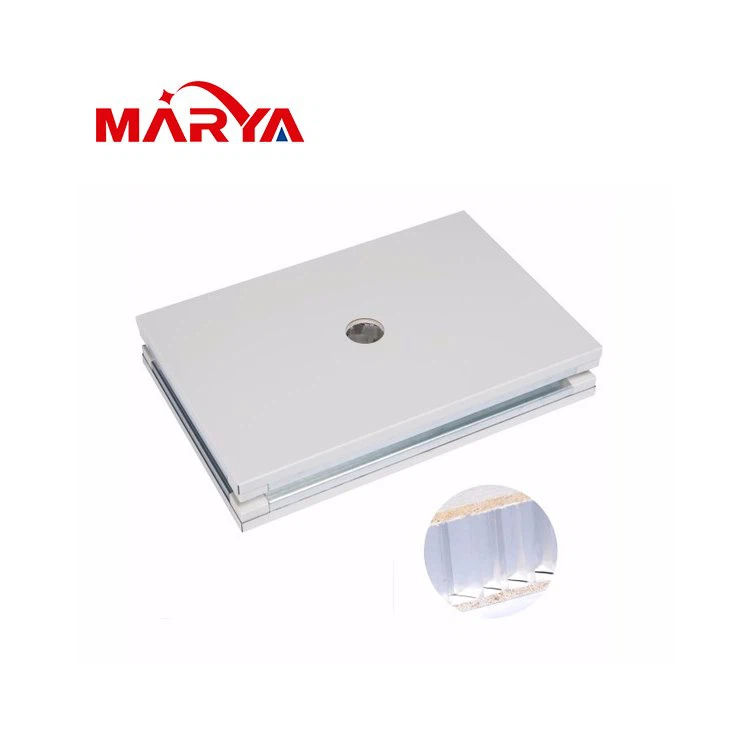
Similarly, our Clean Room Sandwich Panel is constructed with materials that have low particle emission rates. The panels are sealed properly to prevent any internal particles from escaping into the clean room environment.
2. Chemical Resistance
Clean rooms often use various chemicals for cleaning, sterilization, and manufacturing processes. So, the materials used in a Class 1000 clean room need to be chemically resistant.
If a material is not chemically resistant, it can react with the chemicals used in the clean room, leading to degradation of the material and the release of contaminants. For instance, the walls and floors in a clean room should be able to withstand the cleaning agents used regularly. Our clean room panels are tested to ensure they can resist a wide range of common chemicals, including disinfectants and solvents.
3. Durability
In a busy clean room environment, materials are subjected to a lot of wear and tear. They need to be durable enough to last for a long time without breaking down or degrading.
Take the Sliding Door for example. It's used frequently, and it needs to be able to withstand repeated opening and closing without any issues. Our sliding doors are made with strong and reliable components that ensure long - term performance. The frames are made from robust materials that can handle the stress of daily use.
4. Ease of Cleaning
Maintaining the cleanliness of a Class 1000 clean room is an ongoing process. So, the materials used should be easy to clean.
Smooth surfaces are much easier to clean than rough or textured ones. Our clean room materials, like the sandwich panels and doors, have smooth finishes that can be wiped down easily. There are no crevices or hard - to - reach areas where dirt and particles can accumulate. This makes it much quicker and more effective to clean the clean room, reducing the risk of contamination.
5. Static Control
Static electricity can attract and hold particles, which is a big no - no in a clean room. Materials used in a Class 1000 clean room should have good static control properties.
We offer materials that are either anti - static or have low static generation. For example, some of our flooring materials are designed to dissipate static electricity, preventing the build - up of charge that could attract particles. This helps in keeping the clean room environment free from static - related contamination.
6. Fire Resistance
Safety is always a top priority in any industrial environment, and clean rooms are no exception. The materials used in a Class 1000 clean room should have adequate fire - resistance properties.
Our clean room panels and doors are tested to meet fire - safety standards. They are made from materials that are slow - burning or non - combustible, which can help in preventing the spread of fire in case of an emergency.
7. Compatibility with Clean Room Equipment
The clean room materials should be compatible with the equipment used in the clean room. For example, if there are specialized manufacturing machines in the clean room, the materials used for the walls and floors should not interfere with the operation of these machines.
We work closely with our customers to understand the equipment they use in their clean rooms. This allows us to recommend materials that are fully compatible, ensuring smooth operation of the clean room and its equipment.
8. Regulatory Compliance
Class 1000 clean rooms are often subject to strict regulations, especially in industries like pharmaceuticals and food production. The materials we supply are compliant with all relevant industry standards and regulations.
We keep up - to - date with the latest regulatory requirements and ensure that our products meet or exceed them. This gives our customers peace of mind knowing that they are using materials that are legal and safe for their clean room operations.
In conclusion, the requirements for clean room materials in a Class 1000 clean room are quite strict. But as a reliable clean room material supplier, we've got you covered. We offer a wide range of high - quality materials that meet all these requirements.
If you're in the market for clean room materials for your Class 1000 clean room, don't hesitate to get in touch. We can provide you with detailed information about our products, offer customized solutions, and help you make the best choices for your clean room project.
References
- ISO 14644 - 1:2015, Cleanrooms and associated controlled environments — Part 1: Classification of air cleanliness
- Federal Standard 209E (although obsolete, still a reference for understanding clean room classes)