

Hey there! As a supplier of clean room materials, I've had my fair share of experience in the aerospace industry. Clean rooms are super crucial in aerospace applications, and the materials used in them need to meet some pretty strict requirements. Let's dive into what those requirements are.
1. Particle Generation and Contamination Control
In aerospace clean rooms, the number one priority is to keep particles and contaminants at bay. Any tiny particle can mess up the manufacturing or testing processes of aerospace components. For example, in the production of microelectronics used in satellites or aircraft avionics, even a single particle can cause a short - circuit or a malfunction.
That's why the materials we use should have extremely low particle generation rates. Our Sliding Door is designed to minimize particle shedding. It's made from high - quality materials that are smooth and non - porous, so there are fewer places for particles to get trapped and then released into the clean room environment.
The Clean Room Sliding Door is another great option. It has a special sealing mechanism that prevents outside air, which may carry contaminants, from entering the clean room. This is essential because aerospace clean rooms often need to maintain a specific level of air cleanliness, like Class 100 or even Class 10 in some cases.
2. Chemical Resistance
Aerospace manufacturing involves the use of a variety of chemicals, such as solvents for cleaning, adhesives for bonding, and coatings for protection. So, the clean room materials must be resistant to these chemicals.
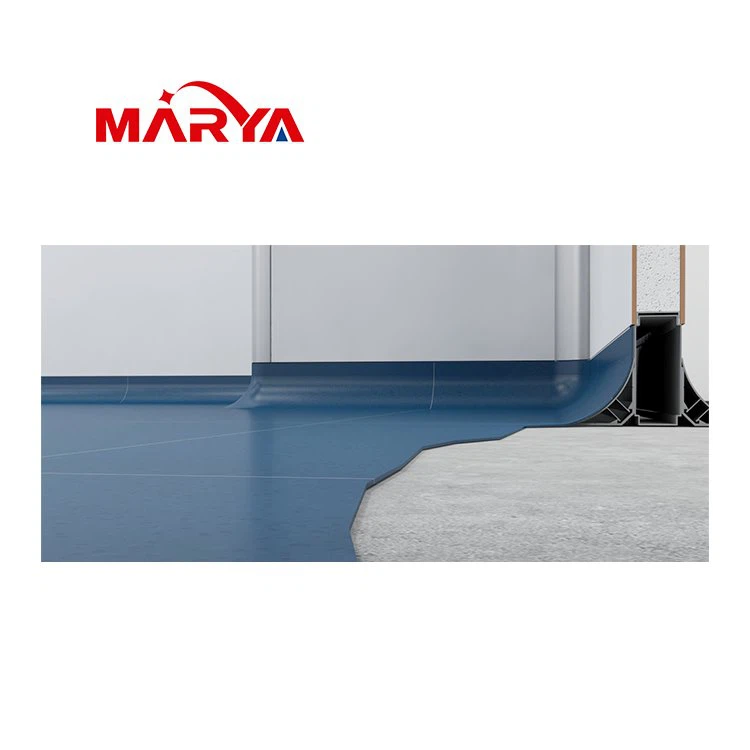
For instance, the Cleanroom PVC Floor we offer is highly chemical - resistant. It can withstand exposure to common aerospace chemicals without degrading or releasing harmful substances. This is important not only for the longevity of the floor but also for maintaining the purity of the clean room environment. If a floor material reacts with chemicals, it could create new contaminants or compromise the structural integrity of the floor.
3. Static Control
Static electricity can be a real headache in aerospace clean rooms. It can attract particles, damage sensitive electronic components, and even cause sparks, which is a huge safety risk, especially when dealing with flammable materials.
Many of our clean room materials are designed with static - dissipative properties. For example, the walls and ceilings in our clean room systems are made from materials that can conduct static electricity safely to the ground. This helps to prevent the build - up of static charges and keeps the clean room environment safe and particle - free.
4. Durability and Longevity
Aerospace clean rooms are expensive to build and operate. So, the materials used in them need to be durable and long - lasting. They should be able to withstand the wear and tear of daily operations, including constant cleaning, equipment movement, and personnel traffic.
Our sliding doors and clean room panels are made from high - strength materials that can endure heavy use. They are also designed to be easy to maintain, which reduces the overall cost of ownership. A durable clean room material means less frequent replacement, less downtime for repairs, and more consistent performance over time.
5. Compatibility with Clean Room Equipment
The clean room materials must be compatible with the equipment used in the aerospace clean room. For example, the floors need to be able to support the weight of heavy machinery without cracking or deforming. The walls and ceilings should not interfere with the operation of ventilation systems or other clean room equipment.
We work closely with aerospace companies to ensure that our materials are a perfect fit for their specific equipment and processes. This may involve customizing the materials or providing additional support and installation services.
6. Ease of Cleaning and Disinfection
Cleanliness is the name of the game in aerospace clean rooms. The materials used should be easy to clean and disinfect. They should not have any crevices or rough surfaces where dirt and contaminants can accumulate.
Our Cleanroom PVC Floor is smooth and seamless, making it easy to wipe clean. The sliding doors and panels can also be easily cleaned with standard clean room cleaning agents. This ensures that the clean room can be maintained at the required level of cleanliness with minimal effort.
7. Fire Resistance
Safety is always a top concern in aerospace applications. Clean room materials need to be fire - resistant to prevent the spread of fire in case of an accident.
Our materials are tested to meet strict fire safety standards. They are made from non - combustible or slow - burning materials that can help to contain a fire and give personnel more time to evacuate the clean room safely.
8. Regulatory Compliance
Aerospace clean rooms are subject to a variety of regulations and standards, both national and international. The materials used in these clean rooms must comply with these regulations.
We stay up - to - date with all the latest regulations and ensure that our products meet or exceed the required standards. This gives our customers peace of mind knowing that they are using materials that are legal and safe for their aerospace applications.
In conclusion, the requirements for clean room materials in aerospace applications are quite demanding. But as a clean room material supplier, we're up for the challenge. We've got a wide range of products, like the Sliding Door, Clean Room Sliding Door, and Cleanroom PVC Floor, that are designed to meet all these requirements.

If you're in the aerospace industry and looking for high - quality clean room materials, don't hesitate to get in touch with us. We can help you find the perfect materials for your clean room and ensure that your aerospace manufacturing or testing processes run smoothly. Let's work together to build a cleaner, safer, and more efficient aerospace clean room!
References
- "Aerospace Clean Room Standards and Best Practices" - Industry white paper
- "Clean Room Materials: Selection and Application" - Technical handbook