

Hey there! As a supplier of Cleanroom Systems, I often get asked about the particle counts in different classes of cleanrooms. It's a crucial topic for those in industries like pharmaceuticals, electronics, and more, where even the tiniest of particles can mess up the production process. So, let's dive right in and explore what these particle counts mean and how they vary across different cleanroom classes.
What are Particle Counts?
First things first, let's understand what particle counts are. In a cleanroom, particle counts refer to the number of particles of a certain size per unit volume of air. These particles can be dust, bacteria, or other contaminants. The lower the particle count, the cleaner the air in the cleanroom.
Cleanrooms are classified based on the maximum allowable number of particles of a specific size per cubic meter or cubic foot of air. The most common classification system is the ISO standard, which ranges from ISO Class 1 (the cleanest) to ISO Class 9 (the least clean).
ISO Class 1 Cleanrooms
ISO Class 1 cleanrooms are the crème de la crème of cleanrooms. They're used in industries where the highest level of purity is required, like semiconductor manufacturing and some high - tech research.
In an ISO Class 1 cleanroom, the maximum number of particles equal to or larger than 0.1 micrometers is 10 particles per cubic meter. For particles equal to or larger than 0.2 micrometers, it's 2 particles per cubic meter, and for particles equal to or larger than 0.5 micrometers, there should be no more than 1 particle per cubic meter.
These extremely low particle counts are achieved through a combination of high - efficiency particulate air (HEPA) and ultra - low penetration air (ULPA) filters, along with strict personnel and equipment protocols. If you're in an industry that demands this level of cleanliness, you might be interested in our Pharma Electric Cleanroom. It's designed to meet the most stringent requirements and maintain those super low particle counts.
ISO Class 2 Cleanrooms
ISO Class 2 cleanrooms are also pretty darn clean. They're commonly used in advanced semiconductor manufacturing and some aerospace applications.
In an ISO Class 2 cleanroom, the maximum number of particles equal to or larger than 0.1 micrometers is 100 particles per cubic meter. For particles equal to or larger than 0.2 micrometers, it's 24 particles per cubic meter, and for particles equal to or larger than 0.3 micrometers, it's 10 particles per cubic meter. There should be no more than 4 particles equal to or larger than 0.5 micrometers per cubic meter.
Maintaining these particle counts requires a well - designed ventilation system with high - grade filters. We have some great solutions in our Electric Cleanroom range that can help you achieve and maintain the ISO Class 2 standards.
ISO Class 3 Cleanrooms
Moving down a bit, ISO Class 3 cleanrooms are used in industries like optical lens manufacturing and some precision electronics assembly.
In an ISO Class 3 cleanroom, the maximum number of particles equal to or larger than 0.1 micrometers is 1,000 particles per cubic meter. For particles equal to or larger than 0.2 micrometers, it's 237 particles per cubic meter, and for particles equal to or larger than 0.3 micrometers, it's 102 particles per cubic meter. There should be no more than 35 particles equal to or larger than 0.5 micrometers per cubic meter.
To keep these particle counts in check, regular air monitoring and proper cleaning procedures are essential. Our cleanroom systems come with advanced monitoring tools to ensure that you're always within the required limits.
ISO Class 4 and ISO Class 5 Cleanrooms
ISO Class 4 and ISO Class 5 cleanrooms are widely used in the pharmaceutical industry for aseptic processing and in biotechnology research.
In an ISO Class 4 cleanroom, the maximum number of particles equal to or larger than 0.1 micrometers is 10,000 particles per cubic meter. For particles equal to or larger than 0.2 micrometers, it's 2,370 particles per cubic meter, and so on. In an ISO Class 5 cleanroom, the limits are higher still. For example, the maximum number of particles equal to or larger than 0.5 micrometers is 3,520 particles per cubic meter.
These cleanrooms need a combination of good filtration, proper air flow management, and strict gowning procedures for personnel. Our Pharma Electric Cleanroom is designed to meet the specific needs of these industries, ensuring that the particle counts stay within the required range.
ISO Class 6, ISO Class 7, and ISO Class 8 Cleanrooms
ISO Class 6, 7, and 8 cleanrooms are used in a variety of industries, including medical device manufacturing, food processing, and some general electronics assembly.
As the class number increases, the allowable particle counts go up. For example, in an ISO Class 6 cleanroom, the maximum number of particles equal to or larger than 0.5 micrometers is 35,200 particles per cubic meter. In an ISO Class 7 cleanroom, it's 352,000 particles per cubic meter, and in an ISO Class 8 cleanroom, it's 3,520,000 particles per cubic meter.
Our Dust Free Cleanroom solutions can be customized to meet the requirements of these different classes. Whether you need a basic cleanroom for a small - scale operation or a large - scale facility with strict particle count control, we've got you covered.
ISO Class 9 Cleanrooms
ISO Class 9 cleanrooms are the least clean of the ISO - classified cleanrooms. They're often used in industries where a relatively low level of cleanliness is sufficient, like some light manufacturing and warehousing.
In an ISO Class 9 cleanroom, the particle counts are much higher compared to the other classes. However, they still need to be monitored to ensure that they don't exceed the acceptable limits.
Why Particle Counts Matter
So, why are these particle counts so important? Well, in industries like pharmaceuticals, even a single particle can contaminate a batch of drugs, leading to serious health risks for patients. In electronics manufacturing, particles can cause short - circuits or other defects in the products. By maintaining the appropriate particle counts in cleanrooms, companies can ensure the quality and safety of their products.

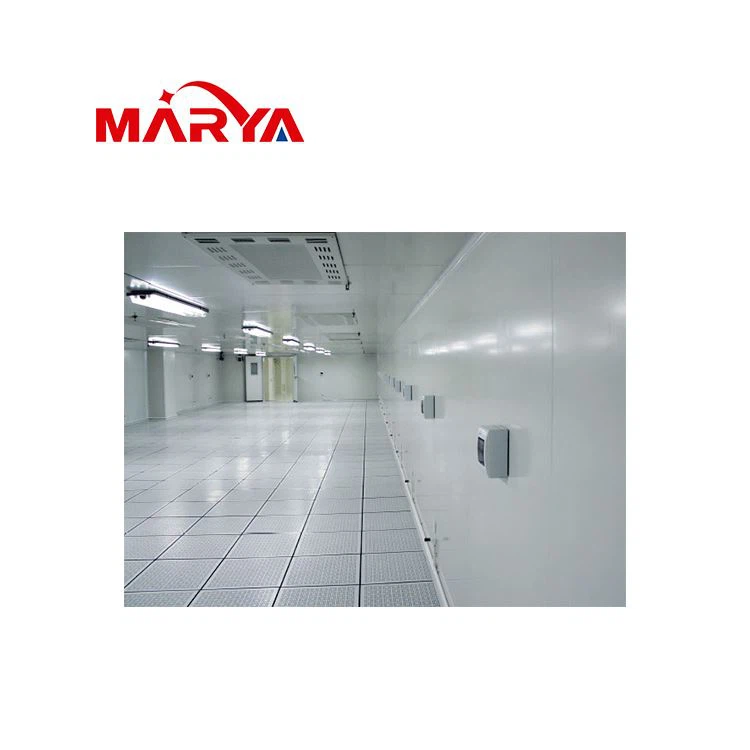
How We Can Help
As a Cleanroom System supplier, we have a wide range of products and services to help you achieve and maintain the right particle counts for your specific needs. Our cleanrooms are designed with the latest technology and high - quality materials to ensure maximum efficiency and reliability.
Whether you need a small, custom - built cleanroom or a large - scale facility, we can work with you to design and install the perfect solution. We also offer comprehensive after - sales support, including maintenance, calibration, and air quality testing.
If you're in the market for a cleanroom system and want to learn more about how we can help you control particle counts in your specific industry, don't hesitate to reach out. We're here to answer all your questions and guide you through the process of choosing the right cleanroom for your business.
Conclusion
In conclusion, understanding the particle counts in different classes of cleanroom systems is crucial for industries that rely on clean environments. From the ultra - clean ISO Class 1 cleanrooms to the relatively less - clean ISO Class 9 cleanrooms, each class has its own specific particle count requirements.
As a supplier, we're committed to providing high - quality cleanroom solutions that meet these requirements. So, if you're looking for a reliable partner to help you with your cleanroom needs, give us a shout. Let's work together to create a clean and productive environment for your business.
References
- ISO 14644 - 1:2015, Cleanrooms and associated controlled environments — Part 1: Classification of air cleanliness.
- Federal Standard 209E (Superseded), Airborne Particulate Cleanliness Classes in Cleanrooms and Clean Zones.